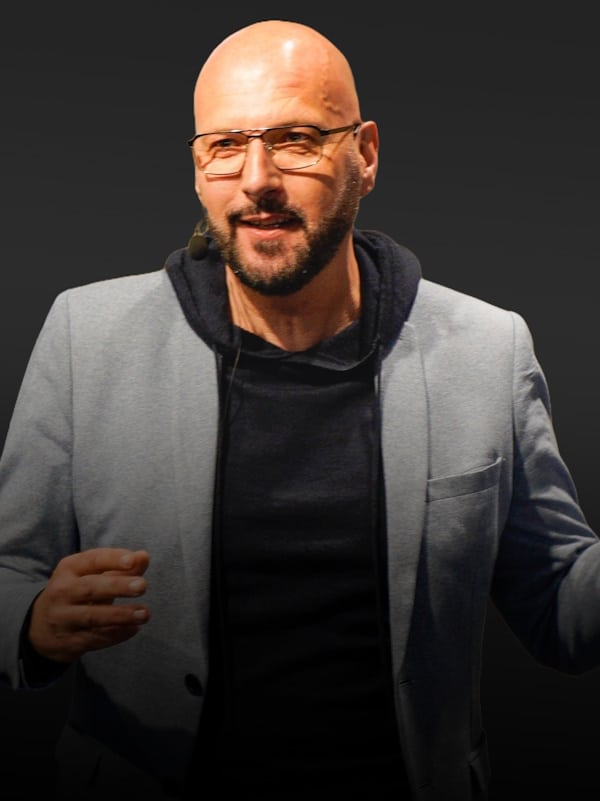
Wolfgang Gründinger, born in 1984, is regarded as a generational explainer, demographic expert, and future lobbyist. He is the spokesperson for the esteemed Foundation for the Rights of Future Generations, described as the “most important extra-parliamentary think tank for generational ...
Wolfgang Gründinger, born in 1984, is regarded as a generational explainer, demographic expert, and future lobbyist. He is the spokesperson for the esteemed Foundation for the Rights of Future Generations, described as the “most important extra-parliamentary think tank for generational justice” (Wirtschaftswoche). In five books, he has dedicated himself to generational justice, sustainability, demographic change, future-oriented democracy, and climate and energy policy. In his doctoral thesis, he is currently researching the role of lobbying and interest groups in the energy transition, supported by a scholarship from the Foundation of German Business.
Gründinger gained recognition through a series of actions: whether it was a civil disobedience action at the UN Climate Summit in Cancun, where he was removed from the conference site by police, his campaign for a “Climate-Neutral Bundestag,” his constitutional complaint against the minimum voting age, which he filed together with eleven children, or the future manifesto he initiated with young politicians from six parties, published in the weekly newspaper DIE ZEIT. As a convinced social democrat, he nevertheless joined the Pirate Party and wrote about his experiences as a dual member of the SPD and Pirates in his book “My Little People’s Party.”
He is a member of the young think tank of the Club of Rome, an advisory board member of the German Environmental Foundation, and a member of the State Council for Digital Development and Culture of the Rhineland-Palatinate state government. He has also served on several other commissions, such as the Youth Committee of the Federal Ministry for the Environment or an expert group for the National Action Plan for a Child-Friendly World, and has been a delegate to several UN summits.
Due to his commitment to generational justice, he has earned a unique reputation. “You do not have a new Che Guevara, you do not have a new Rudi Dutschke. The young Germans only have Wolfgang Gründinger,” writes DIE ZEIT. Der SPIEGEL referred to him as a “political talent,” NEON praises him as “more reasonable than Philipp Missfelder,” and ZEIT CAMPUS counts him among “100 students we will hear from again.” HANDELSBLATT and CAPITAL consider him part of the “young elite of Germany.”