About
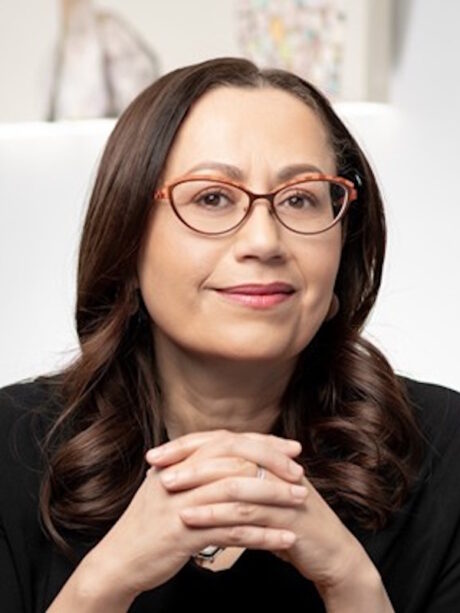
Mayada El-Zoghbi
Mayada El-Zoghbi is a technology and social impact leader with over 20 years of experience working at the intersection of innovation, development, and global policy. She is an author, speaker and thought leader focusing on understanding when technology includes people – and when it leaves them behind.
Having spent 11 years with the World Bank and over 15 years in leadership roles at global think tanks and consultancies, Mayada brings deep expertise in how emerging technologies can drive inclusive growth. Her work has focused on opportunities where innovation can unlock new solutions for underserved communities, with a particular interest in translating cutting-edge technology into real-world impact.
With a global network spanning Africa, Europe, the Middle East, Latin America, and Asia, Mayada speaks on the future inclusive digital development, responsible innovation, and how technology can address some of the world’s most pressing challenges, while ensuring it minimizes harms to vulnerable groups.
1. Inclusive finance
Financial services serve as the backbone of any economy. As the financial system is digitalized with new players like fintechs and ecommerce companies embedding finance, policymakers and financial services providers must understand the implications these changes can have on individuals and firms, as well as the financial system as a whole.
Just as digital finance has created enormous opportunity to expand the financial system to previously underserved communities, digitalization has also increased the speed at which fraud and scams are proliferating. Policymakers and financial service providers must consider what it takes to help consumers and firms participating in the financial system to reduce harms and safeguard the stability of the financial system.
2. Inclusive digital development
Digital development is proceeding at enormous speed everywhere yet many segments are being left behind. Although already there are 5.3 billion people were using the internet as of 2022, only one in four people in low-income countries were doing so (World Bank Group).
There are 2.7 billion people who are not connected to the internet (Internet Society). Inclusive digital development requires policymakers, companies and civil society to understand the pain points that different segments experience to access and benefit from adoption of technology. Mayada is able to speak about how policymakers, companies and civil society can take into account the needs of different groups in society to ensure that they can fully participate in and benefit from digital development.
3. The platform/digital economy and inclusive participation
This topic covers inclusion in the digital economy. Mayada is able to cover how the current evolution of digital development is leading to concentrations of power with platform businesses and what is needed to level the playing field to ensure that people and firms are able to fully participate and benefit.
4. Women’s financial inclusion and digital development
Despite significant progress in many part of the developing world in accessing technology and finance, women remain far behind their male counterparts. Worldwide, men are 21 percent more likely to be online than women (Mozilla Foundation). The reasons are multifold: availability, affordability, gender norms, digital literacy, and a host of other issues. In countries like India, only 25 percent of women own a mobile phone compared to 41 percent of men (Times of India).
Those who own mobile phones are more likely to experience the benefits of the digital economy, which extend to safety in the community, access to information, and staying connected to family and friends. Phones also unlock another important door, access to the financial system, allowing them to build a data trail that can then be used to create ‘digital files’ that allow them to access credit, enroll for government programs, and gain credibility in other ways. Mayada is able to discuss what policymakers and companies can do to support women’s full participation in the economy.
5. Micro, small and medium enterprises
MSMEs represent more than 80% of labor in most developing countries. They are a critical engine of livelihoods and yet many remain informal and lack access to finance. Mayada’s research has explored what MSMEs need to adopt technology and benefit from the digital economy.




 © Paco Alacid