About
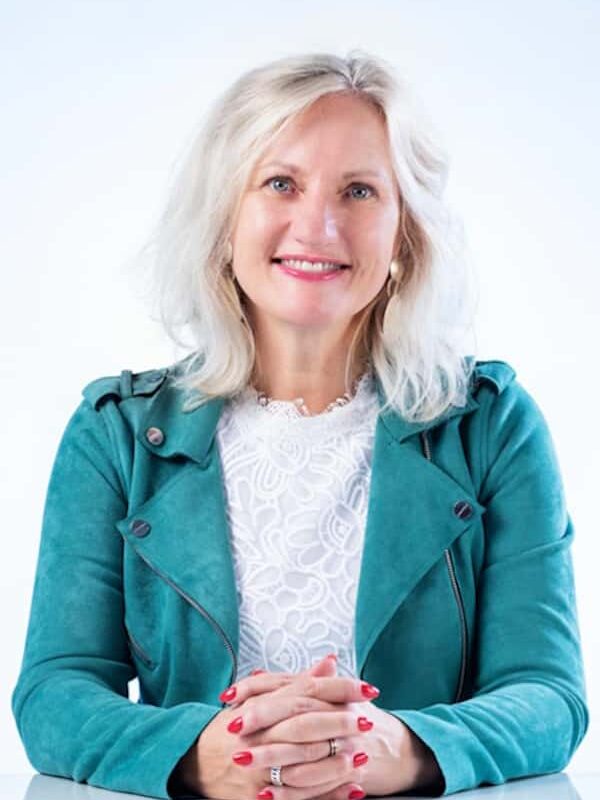
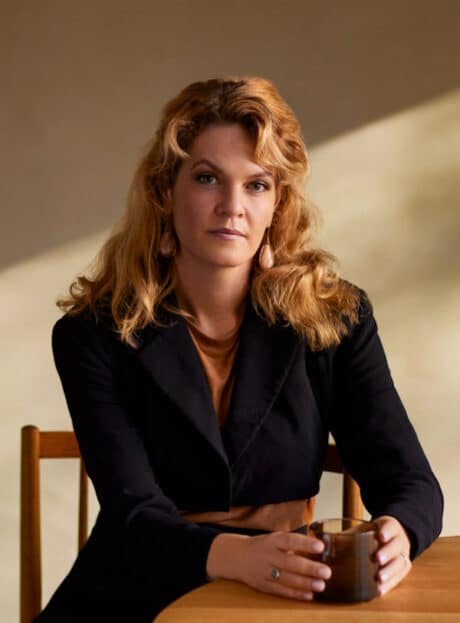
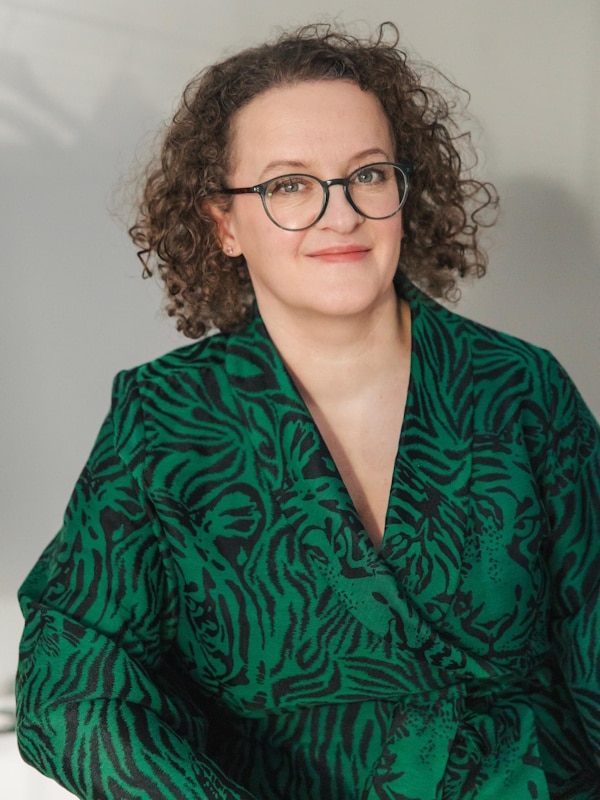
Jolanda ter Maten
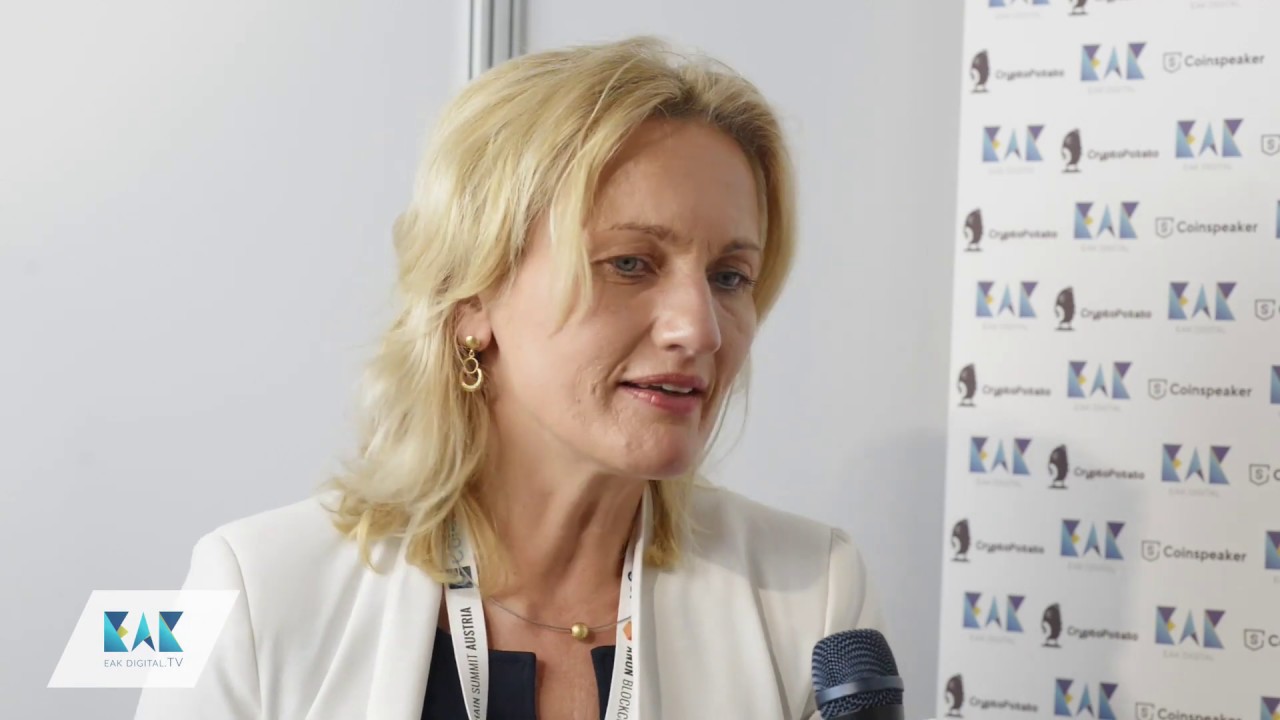
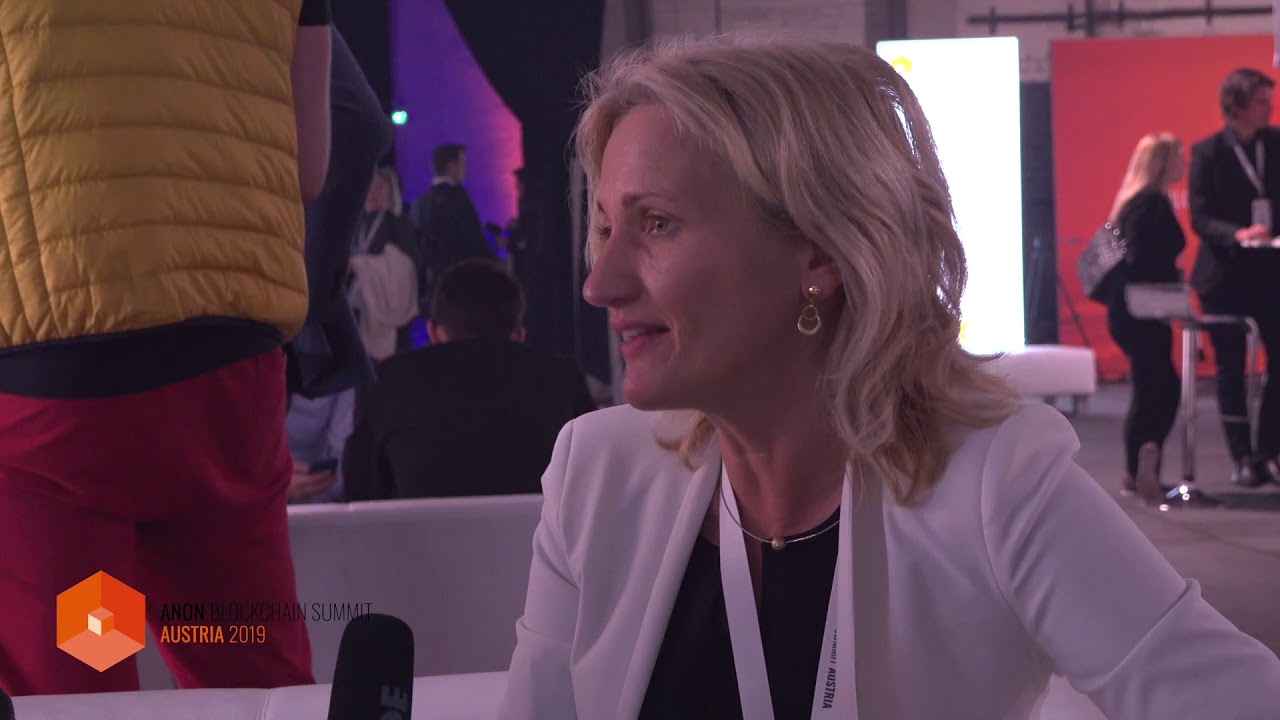
For 25 years Jolanda ter Maten has worked at the intersection of people and technology. That makes her one of the few AI speakers who did not discover the field in recent years, but has watched it evolve from the start. Jolanda is an expert for the European Commission on AI awareness and the EU AI Act, a former contributor to international AI standards at ISO, and an evaluator of technology innovation proposals within the Horizon Europe programme. She is internationally booked for keynotes and training, including in London and Toronto.
The central thread in her work is as simple as it is uncomfortable: roughly seven out of ten AI implementations fail to deliver. Not because of the technology, but because of leadership. Organisations invest in licenses and pilots, but not in the capabilities needed to actually turn AI into lasting value. Jolanda shows what goes wrong in that seventy percent, and how your organisation can end up in the thirty percent that does deliver.
Jolanda is the author of *Modern Leadership Is Not an Algorithm* (2026), which lays out the thinking behind her keynotes. Her sessions are sharp, accessible and free of hype. She translates AI, the EU AI Act and generative technology into clear language for diverse audiences, from boards and CHROs to policymakers, compliance officers, information security leaders and employees who have to work with AI tomorrow. Every keynote is tailored through a preparatory conversation to your sector, audience and strategic question. You do not get a standard talk, but a session that moves your organisation forward.
Her signature framework: technology as a multiplier
One thinking pattern runs through all of Jolanda’s work. Technology is a multiplier. AI amplifies what organisations already do, including everything that is not going well. Organisations with clear accountability and a culture that surfaces mistakes make AI deliver. Organisations that deploy AI on a foundation of diffuse accountability and avoided conversations organise their own problems at scale. Around this model Jolanda works with concepts like cultivating leadership, trust architecture, automation bias and automation creep. That shared language gives board, HR and operations one vocabulary to think and decide about AI. It is what sets her approach apart from speakers who present trends rather than thinking frameworks.
Master of ceremonies
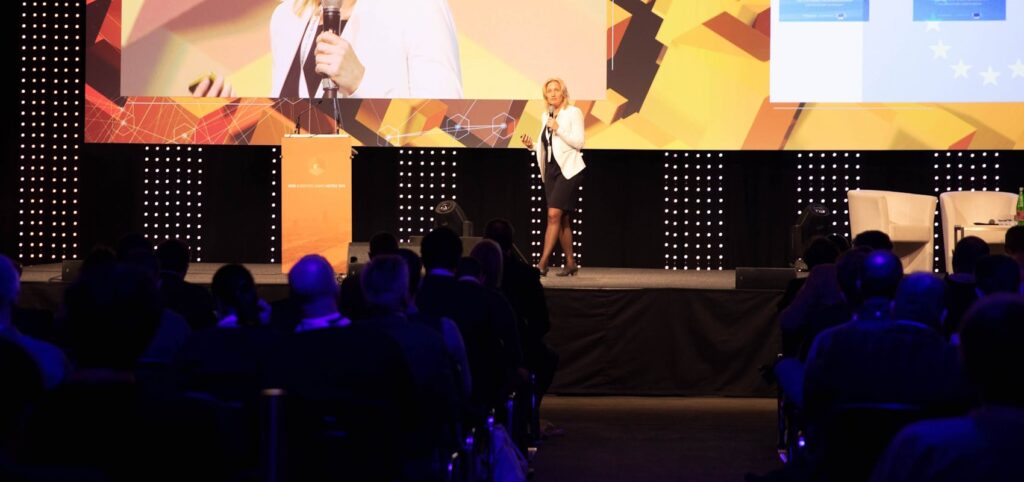
Jolanda is a sharp master of ceremonies for conferences and events on AI, digital transformation, leadership and the future of work. She connects speakers, asks the questions the audience is thinking but not voicing, and ensures that the programme as a whole adds up to more than the sum of its parts.
International position and EU authority
Jolanda’s distinctive strength is her dual role: international policy and day to day organisational practice. As an expert for the European Commission she contributes to AI awareness and to policy initiatives around the EU AI Act. Within Horizon Europe she evaluates grant proposals for AI and emerging technology innovations in education, healthcare and business. As a result she sees which innovations will land in the market three to five years from now, before they arrive on your desk. That forward view is rare in the Netherlands and immediately valuable for clients in regulated sectors.
Why Jolanda ter Maten
She has stood at the intersection of people and technology for 25 years, long before AI became a hype. She combines international policy work for the European Commission with day to day practice in law firms, financial institutions and public sector organisations. She does not focus on tools but on a thinking framework: technology as a multiplier. Her thinking is set out in her book *Modern Leadership Is Not an Algorithm* (2026), which gives her keynotes the depth and consistency organisations need to move from experiment to return.
1. Modern Leadership Is Not an Algorithm: leading in an AI driven organisation
Around seventy percent of AI implementations fail to deliver. Not because of the technology, but because of leadership. In this keynote Jolanda takes you through what AI really asks of leadership as technology takes on a growing role in decision making. She shows why control as a steering model no longer works, and what needs to take its place. After this session you have an answer to these questions: Where do AI efforts actually fail on leadership rather than tech? How do you steer on direction and trust instead of control? Which decisions belong to you as a leader, and which do not? And how do you build an organisation that surfaces mistakes before they multiply at scale?
For: CEOs, COOs, board members, executives, general managers, leadership teams in both public and private sector.
2. Skills for an AI Future: invest in capabilities, not in tools
Skills are temporary, capabilities are durable. In this keynote Jolanda shows why skills matrices keep going stale, and which capabilities continue to create value in organisations where humans and AI work side by side. She makes it concrete for HR, L&D and executive teams responsible for workforce transformation. After this session you have an answer to these questions: Which human capabilities become more valuable because of AI, and which do not? How do you roll out AI literacy in a way that actually changes behaviour? How do you prevent your skills programme from being outdated next year? And how do you align HR, IT and the business on a shared language about work and technology?
For: CHROs, HR directors, heads of People & Organisation, L&D leaders, heads of strategic workforce planning, talent development managers.
3. AI Governance and Ethics: from paper principles to working practice
Most AI ethics documents are not governance. They are the promise of governance. In this keynote Jolanda shows the difference between principles on paper and decision making that also holds when it matters. She addresses accountability, transparency, bias and the human side of AI governance in a way that is both strategic and practical. After this session you have an answer to these questions: What is the difference between ethics on paper and governance in practice? Who is accountable when an algorithm makes the wrong call? How do you recognise automation bias and automation creep in your own organisation? And how do you build governance that grows with new technology?
For: board members, compliance officers, Chief Risk Officers, Chief Information Security Officers, Data Protection Officers, legal counsel, risk managers.
4. AI in Practice: from strategy to implementation that actually works
Strategy is usually the easy part. Execution breaks down on unclear accountability, isolated pilots and teams that do not speak each other’s language. In this keynote Jolanda shares what successful AI implementations have in common, and why so many initiatives collapse before they deliver return. After this session you have an answer to these questions: Which patterns separate successful AI efforts from failed ones? How do you make sure IT and the business speak one language? Which decisions do you need to make now to avoid getting stuck two years from now? And how do you evaluate AI investments on value rather than on hype?
For: Chief Data Officers, Chief Information Officers, directors of operations, transformation leaders, AI programme managers, strategy and innovation teams.
5. AI Literacy and the EU AI Act: from regulatory burden to strategic advantage
The EU AI Act is coming. Many organisations know they need to act, but not exactly how. In this keynote Jolanda translates the EU AI Act into the questions that actually matter for your organisation. She shows how to use compliance not as a burden but as a strategic compass, and what AI literacy means in concrete terms at every level of your organisation. After this session you have an answer to these questions: What does the EU AI Act concretely require from your organisation, and when? How do you approach AI literacy for board, management and operations? How do you use the AI Act to strengthen your existing governance? And how do you prevent compliance from becoming a cost rather than a lead?
For: policymakers in municipalities, provinces and ministries, compliance and privacy officers, Data Protection Officers, legal departments, CISOs, executives in regulated sectors.
6. Workshop 1: Working effectively with Claude, NotebookLM and generative AI
Generative AI changes work faster than most organisations can keep up with. In this workshop your team learns how to use Claude, NotebookLM and comparable tools responsibly in day to day work, including prompt techniques and team agreements. After this session you have an answer to these questions: Which tasks become faster and better with generative AI? Which do not? Which agreements does your team need on data, sourcing and quality? And how do you keep output quality high without slowing down the work?
Length: half day or full day. For: teams of 8 to 25 professionals, knowledge intensive roles in legal, finance, HR and communications.
7. Workshop 2: AI and the future of work: data, humans and machines in harmony
What does AI mean for work, roles, skills and careers in your organisation? This working session aligns HR, L&D and leadership around one strategic question: how do you build a workforce that does not become obsolete the next time AI takes a leap forward? Jolanda uses current cases from her practice to bring the frameworks to life. After this session you have an answer to these questions: Which tasks in your organisation change first? Which capabilities become more valuable, which do not? How do you organise AI literacy at strategic, tactical and operational levels? And which steps do you take this quarter?
Length: full day or two day programme. For: HR teams, L&D teams, executive and management teams responsible for strategic workforce planning.
8. Workshop 3: Modern Leadership Is Not an Algorithm: a session around the book
Based on Jolanda’s book *Modern Leadership Is Not an Algorithm* (2026), your executive or management team works through the six insights that determine whether AI implementations succeed or fail. An interactive session that translates the book’s central questions into your own organisation: how does AI call for a different kind of leadership, which capabilities hold durable value, and how do you use the EU AI Act as a compass rather than a burden? After the session your team has a shared framework and a first action plan for the next hundred days. All participants receive a signed copy of the book.
Length: half day to full day. For: executive teams, boards, management teams, and leaders who want to position their organisation strategically around AI and leadership.