Over
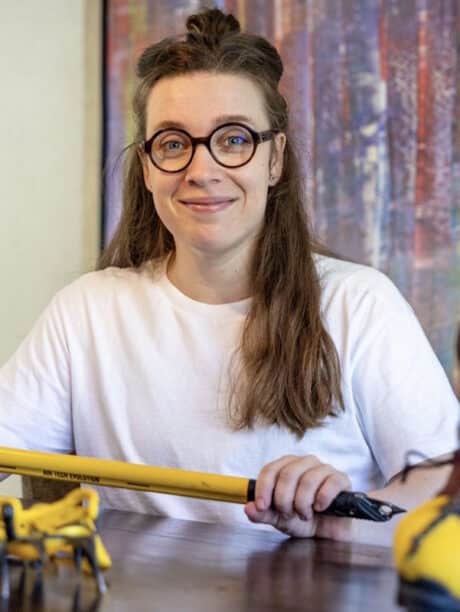
Mary-Claire Rijsman
Iedereen klimt zijn of haar eigen berg, maar hoe zorg je ervoor dat je de top succesvol bereikt? Wat maakt dat je een doel bereikt of niet, en wat kom je onderweg tegen? Op grote hoogte zijn de omstandigheden vaak extreem, en je zult gegarandeerd te maken krijgen met tegenslagen. Hoe ga je daarmee om? En hoe presteer je onder druk? Met adembenemende foto’s neemt Mary-Claire je mee de bergen in, verbindt ze bergbeklimmen met het bedrijfsleven en hoopt ze je te motiveren en inspireren om je eigen top te bereiken en je eigen succes te creëren.
Bergen zijn onze ware spiegel en soms is de berg die overwonnen moet worden, jij.
Mary-Claire heeft haar dubbele diploma in Geallieerde Medische Zorg, magna cum laude behaald en heeft zich gespecialiseerd in anesthesie en spoedeisende medische zorg bij de ambulancezorg. Naast haar werk en bergbeklimcarrière studeert ze Rechten aan de Open Universiteit. Een functie als openbaar aanklager ligt daarom in het verschiet en geen berg is te hoog voor deze ambitieuze 27-jarige.
Aan het einde van de dag zullen we de snelle en gemakkelijke overwinningen niet herinneren, maar de moeilijkste en grootste uitdagingen die we hebben gewonnen.
Als alpinist weet Mary-Claire hoe belangrijk sterke en gezonde spieren zijn om de top te bereiken! Daarom zet ze zich, samen met ‘Spieren voor Spieren’, in voor kinderen met spierziekten. Ze heeft ook veel kinderen met spierziekten behandeld tijdens haar werk op de Kinder-IC. Met haar beklimmingen hoopt ze zoveel mogelijk geld in te zamelen om bij te dragen aan een stralende toekomst met gezonde spieren voor alle kinderen.
1. Pushing boundaries literally and figuratively
In the mountains you literally climb to new heights, with each step being a confrontation with yourself and overcoming obstacles. Reaching the summit represents not only a triumph over the rugged terrain, but also a personal victory and the pushing of physical and mental limits.
Both in the mountains and on the job, the process of pushing boundaries is steeped in perseverance. Whether climbing to a summit or pursuing professional success. It is those who are willing to challenge the status quo and themselves who often achieve the most rewarding outcomes.
2. Dealing with setbacks when you fail to achieve a goal (the summit)
Dealing with setbacks when you don’t achieve your goal, such as reaching the summit, takes resilience and a positive mindset. Instead of getting discouraged by the setback, it provides an opportunity for self-reflection and growth. Every expedition comes with high and lows. Accepting failure as part of the process and maintaining a positive attitude leads to new opportunities and ultimately to longer-term success.
3. The functioning of a team especially during extreme conditions
Team functioning, whether in the mountains or on the job, is put to the test in extreme conditions. In mountainous terrain, where conditions are often unpredictable and challenging, effective communication is essential. A good team anticipates change, works together to overcome obstacles, and shares the heavy load evenly. The same is true at work, where teams are under pressure to meet deadlines or face unforeseen challenges. In both scenarios, trust in team members is crucial, as everyone plays a specific role that contributes to collective success. During extreme circumstances, teams can learn to be flexible, make quick decisions and support each other, which not only improves performance but also strengthens the bonds between them.
4. Motivation and discipline to achieve a long-term goal
Climbing a mountain requires motivation and discipline. Motivation is the force that arises from the desire to reach the summit and the fuel that moves you forward in moments of physical exhaustion. Discipline, on the other hand, emerges when the way up becomes steep and demanding. The combination forms a powerful tandem, allowing mountaineers not only to push their physical limits but also to overcome mental obstacles on the way to the summit.
5. Physical and mental health
Both in the mountains and at work, physical and mental health play a role in achieving success. Physical preparedness is crucial to face challenging terrain and altitudes, requiring a combination of strength, endurance and acclimatization. At the same time, mental resilience is put to the test, confronting yourself and your team through nature in the most extreme conditions. At work, mental resilience is crucial for navigating stressful situations, promoting teamwork and maintaining a positive work environment.
6. Combining top sports and studying
Combining sports and studying is challenging. It requires a commitment to intensive training schedules and expeditions. At the same time, academic success requires consistency, focus and time for study and assignments. Mastering both requires strict planning and discipline. Nevertheless, this combination also offers valuable life lessons, such as the ability to set goals and priorities. Successfully combining sports and studying requires not only athletic talent, but also a determination to excel in the mountains as well as at the University.
7. Explorers Grand Slam
Mary-Claire is on her way to becoming the first Dutch female mountaineer to reach the so-called ‘Explorers Grand Slam’. These are the famous ‘Seven Summits’ – the highest mountain on each continent – and skiing to the last degree of the North and South Pole. This journey has already taken her to the summits of Kilimanjaro, Elbrus and Kosciuszko, and during her Elbrus expedition she even became the first Dutch mountaineer to climb both the east and west summits. She is currently preparing to face Aconcagua, Denali, Vinson and the South Pole in 2024. And to complete this mission, she will climb Mount Everest and ski to the North Pole in 2025.




 © Wouter de Wilde