À propos
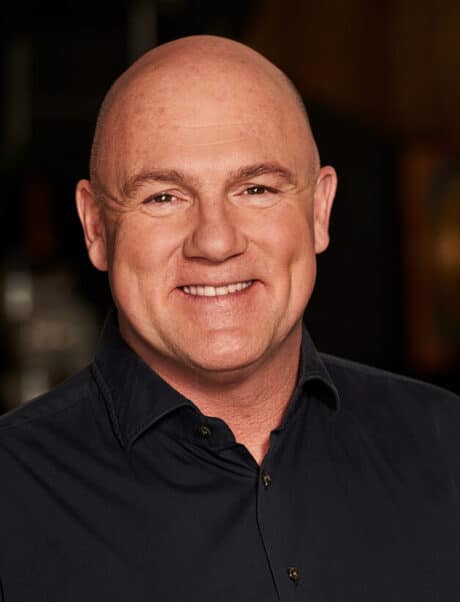
André Kuipers
André Kuipers est un médecin néerlandais et astronaute de l’ESA. Il est le premier Néerlandais à avoir deux missions spatiales à son actif. Sa deuxième mission est le vol spatial le plus long de l’histoire européenne. Au total, l’astronaute de l’ESA a passé 204 jours dans l’espace : 11 jours lors de la mission DELTA en 2004 et 193 jours lors de la mission PromISSe.
Après des années d’entraînement à Houston, Moscou, Cologne, Montréal et Tokyo, un vaisseau spatial Soyouz russe a lancé André et ses deux membres d’équipage de Russie et d’Amérique le 21 décembre 2011 depuis le Kazakhstan. Deux jours plus tard, il est arrivé à la Station spatiale internationale pour vivre et travailler pendant six mois. À bord, il était non seulement médecin, scientifique et ingénieur de vol, mais aussi bricoleur et ambassadeur de plusieurs œuvres de charité. Le 1er juillet 2012, André est revenu sur Terre et a atterri dans sa capsule spatiale dans la steppe kazakhe.
L’astronaute André Kuipers offre un regard unique sur les coulisses des vols spatiaux humains internationaux. Il partage son histoire sur l’entraînement, la mission et sa vue exceptionnelle de notre planète.
1. Technology and innovation
In space you can find an outstanding multinational: the International Space Station (ISS). Realised by the United States of America, Europe, Russia, Canada and Japan.
André Kuipers was given the great privilege to work in the ISS twice and be a part of this international enterprise.
The ISS is the largest, most complex, international technological structure ever made by mankind. Working on groundbreaking technology which can exist in an extraterrestrial environment enables us to come to scientific insights about our place in the universe, we gather enormous amounts of information about our own Earth and the life our planet sustains. In space technology is everywhere: when it comes to medical issues, communications, transport, energy and even when it comes to exercising!
2. Sustainability
When André Kuipers was in the ISS he orbited Earth 16 times a day. Borders dividing countries are not visible from space. What is visible from space are the global challenges humankind faces: climate change, deforestation, erosion, the consequences of urbanisation.
When looking at Earth from space it becomes clear that we live on a small planet in a big and dark universe; Earth is in fact itself a ‘spaceship’ with limited supplies. New technologies – from recycling to satellite Earth observation – are needed to ensure a good future for all of us.
3. Motivation and inspiration
Becoming an astronaut involves quite a lot of effort. It is an endless road full of challenges and sacrifices to realise that one dream. The ability to always carry on, passion, patience and tolerance to frustration are indispensable qualities for any person wanting to be an astronaut, a little bit of luck however comes in handy as well.
However small the chance to succeed might seem, never give up! Boldly go where no one has gone before, because exactly there you will find these chances.
4. Medical aspects of a space exploration
As a physician, André Kuipers was inspired by the idea of helping mankind travel further into space. The way the human body adapts to conditions in space has always intrigued him. Within aerospace medicine, André participated in a variety of research projects. During his space missions, André conducted dozens of medical experiments and was often a ‘guinea pig’ himself.
He tells us first-hand about the influence of acceleration forces and weightlessness on the human body. The medical aspects on board the ISS are discussed, from the gym and the defibrator to psychology and radiation. As well as the systems to make life in space possible anyway: air, food and water.
5. Energy and the future
Humankind is not involved in space exploration because it easy (it usually is not), we are not involved in it because it is hard either (it usually is though). We do it because it gives us a tremendous payoff. André calls it ‘galactic entrepreneurship’. Promising applications are all around, with all of Earth’s population as a client.
Harvest predictions using satellites, new fuel cells developed for space flight, sun sensors which keep solar panels in the sun and mining on the moon. The science fiction of today is the reality of tomorrow.