About
Saskia van Houten
Isn’t psychology something for crazy people? Not for you, who functions just fine. And certainly not for the corporate world. Because there, you focus on your processes, your returns, and, at most, a little on the company culture.
And yet… psychology is involved in more things than you think. For instance, how many personality disorders are there among your executives? And which ones? Why does one colleague energize you while another drains you? How do you ideally structure your workday so that you still have some energy left for your partner, family, hobbies, or the gym at the end of the day? How do we actually handle stress, change, or recharge at the office? Do you encourage each other to stay late, is there an unspoken code to work hard? Or do you have a family culture that seems so pleasant but meanwhile hinders growth in the organization?
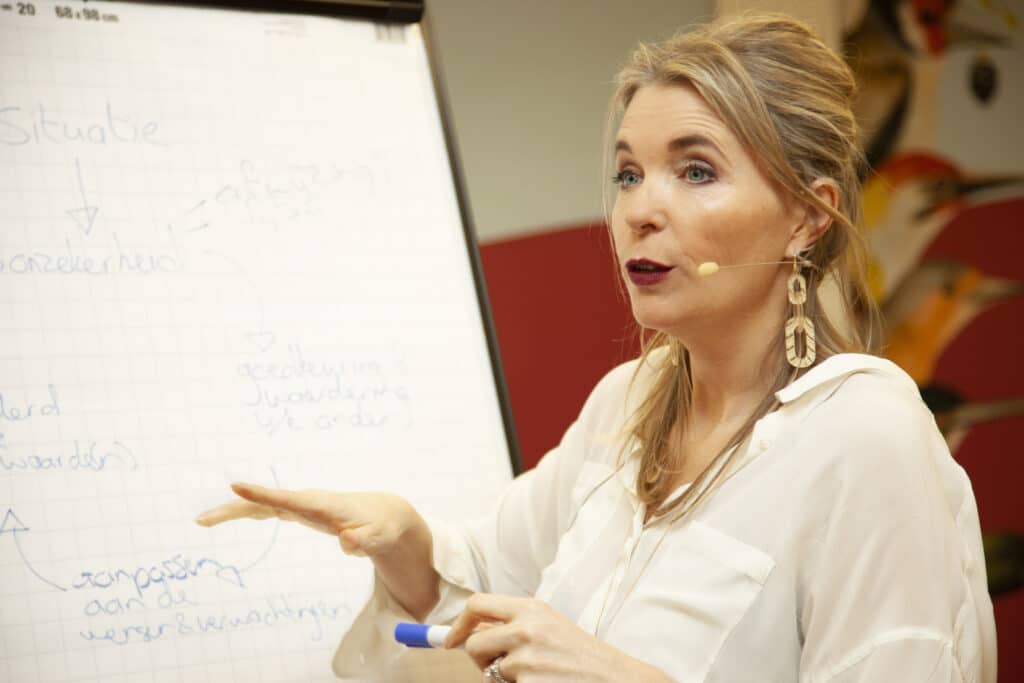
Psychology is intertwined with daily life. Psychologist Saskia van Houten takes you through this in a humorous and comedic way. Especially for her lecture, she takes off her woolen socks and provides your organization with psychological subtitles. So that you can benefit from it in your daily life, and grow both as an individual and as a team.
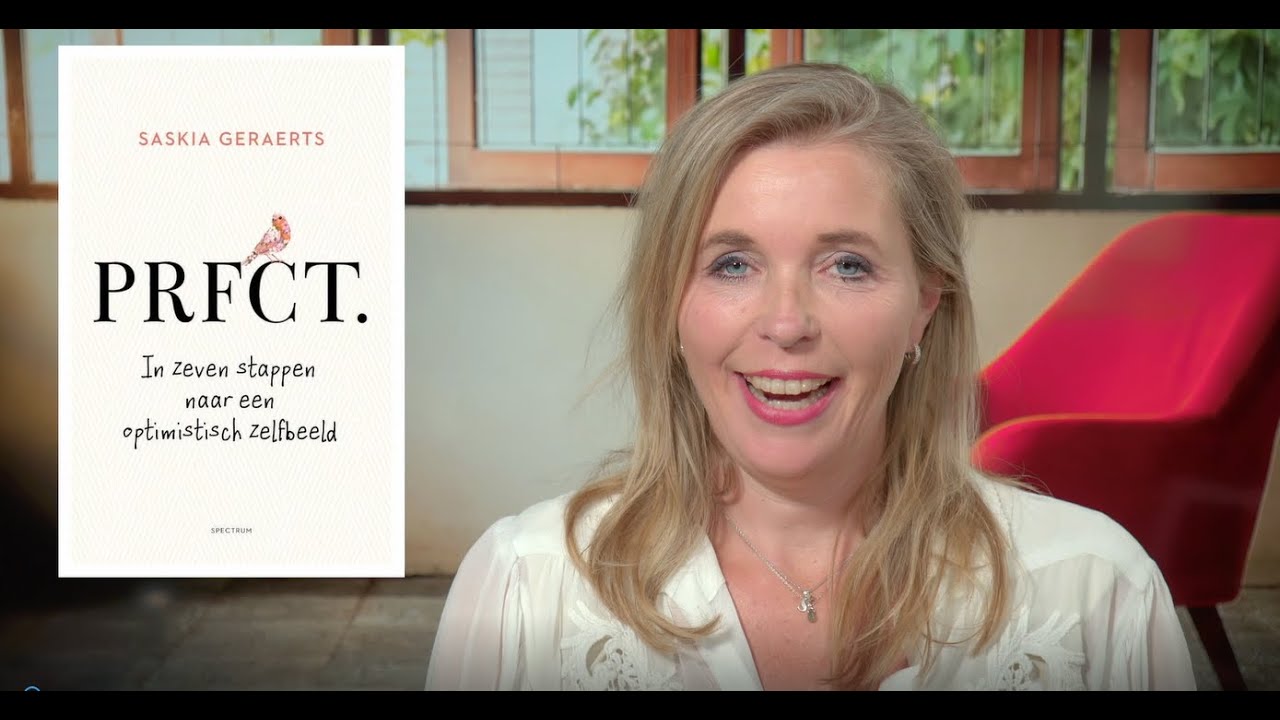
Saskia’s lectures cover topics like ‘Why do we resist change so much’ and ‘How to improve my self-image in 7 steps’. And of course, she can also tailor a topic that fits the theme of your company day or retreat. Saskia also connects the day in a light-hearted manner as a day chair during a conference. She works for organizations such as the Ministry of Defense, ASML, Essent, the province of Brabant, Health Investment, Signify, DAF, and various networks like Écrassée and NVRD.
Saskia is a clinical and occupational and organizational psychologist and author, and a welcome guest on radio and TV. She regularly appears on talk shows like HLF8, Beau, and Jinek, has several documentaries to her name, and is the resident psychologist at De Wild in de Middag. She provides lectures and presentations in both Dutch and English.
Saskia highlights psychology in a light and entertaining way and brings energy to your day. But beware, attending this lecture is entirely at your own risk: you might even learn something about yourself.
1. Psychology in Daily Life; The Brain and What We Can Do with It
For many people, psychology is a distant concept. Something for people who have issues, and something to stay far away from. And that’s how we’ve trained our psychologists: like roadside assistance vehicles that only spring into action when the car is smoking on the hard shoulder. But what if we could change that perspective?
Using psychology not only in a preventive way but also as a means to grow and achieve better results. Individually and collectively. Did you know that your brain is actually the most unreliable source of information we have? That seems almost impossible in this age of AI and GTP. It’s time to make our brain work to our advantage. Because if it can’t distinguish between real and fake, then we can do some wonderful things with it.
2. Work / Life Balance / Work Happiness
It seems to be getting busier. Not only are deadlines increasing, and one reorganisation follows another at a breakneck pace, but also in your private life, demands seem to be piling up rapidly. And if it’s not the work pressure, then it’s the pressure to chase your ultimate dream, feel your passion, or execute your four-hour workweek as a digital nomad on a beautiful beach and post stunning pictures on Instagram.
Before you know it, the demands take their toll, and your employees become part of the 1 in 8 people currently sitting at home with burnout. But the good news is: if 1 in 8 are at home, it also means that 7 out of 8 know how to cope with all the demands of modern times. What is their secret? What tactics do they use, and what psychological tips are there to prevent you from going under in a time where you always seem to have to be on?
3. Psychological Insights for Business
Clinical psychology in business? Why not? What are the greatest insights from psychology, and how can you benefit from them in your company? Do you know, for example, which personality disorders are present in your boardroom? Do we really use only 10% of our brain capacity, and are people with autism indeed more creative? And does the Marshmallow test really have predictive value for the success people have in their later careers? How is a company culture formed, and what does it have to do with monkeys? If you want to learn the real distinction between true psychological facts and pseudoscience, then this lecture is a must.
4. Connection and Collaboration
Humans are one of the few species that cannot take care of themselves after birth. That is the main reason why we are so incredibly focused on collaboration. One of the first things we can do when we come to earth is to evoke sympathy from our caregivers. Because without this care, we cannot survive. Acceptance by the group is therefore a basic need, and the fear of rejection is essentially a fear of death.
But what about our, also primary, need for autonomy? And then add the 21st-century sauce of being unique and special. To be in the spotlight ourselves. What does that do to our drive for connection and our ability for true collaboration? And how has Corona turned this process completely upside down? Can we still truly collaborate?
5. Behavioural Change
Everyone wants change. No one wants to change. We would prefer to wake up at the end of that tough period. We have plenty to say about someone else’s behaviour and can clearly see where their improvement points are. But when it comes to ourselves, we have quite a blind spot. What is scary about change? Why do we find it so difficult?
We collectively make good resolutions at the beginning of the year, only to abandon them disillusioned after three weeks. But how is it that some people succeed? And why are people who can change their behaviour more successful, happier, and more resilient than others? Let’s take a look at the basic principles of psychology to join this group ourselves.
6. (Personal) Branding
In this interactive morning, you will really get to work to present yourself truly well. So that you stand out and can pursue your biggest dreams. We look at the unique talents and possibilities of the workshop participants, and in a playful and light-hearted way, you learn to present yourself. The workshop lasts half a day and is an ideal part of a multi-day training.
7. Resilience
What is resilience, and why do we want it? It turns out that you are not shaped by the number or nature of setbacks you experience. It’s about how and how quickly you recover from them. We all know Post Traumatic Stress. Recently, psychological researchers discovered that there is also something called Post Traumatic Growth.
We distinguish three forms: physical, mental, and emotional resilience. And what turns out: it can be trained like a muscle. We used to think it was a trait you were born with and had to make do with. Now we know that this might be the golden ingredient that all successful and happy people have in common.
8. Personal Development, Happiness, and Positive Psychology
Traditionally, psychology was focused on reducing a problem. On helping someone who was struggling. For about 40 years now, there has been a new, more optimistic movement in psychology. A movement focused on growth and development. And especially on increasing life happiness. We see that people who actively engage with positive psychology are happier and more successful. And in companies that engage with it, there is less turnover and lower absenteeism. All the more reason to get to know this new sibling of the psychological family better, right?
9. Lecture on Request
Saskia is an energetic, cheerful speaker who is ideally suited as an energiser at the beginning or end of a conference day. In a humorous way, she weaves psychological knowledge into the current events playing at your company, and she is happy to create a customised lecture for your event.
10. How to deal with challenging clients
We all want as many clients as possible, but our lives would sometimes be much easier without them…. What psychological laws can we use to deal with them as best as possible? And what do effervescent tablets and lozenges have to do with this?