This site requires JavaScript to render the code.

Need to know how to enable JavaScript? Go here.

Speakers
© Nathania Margarita
First Young Thinker of the Nation

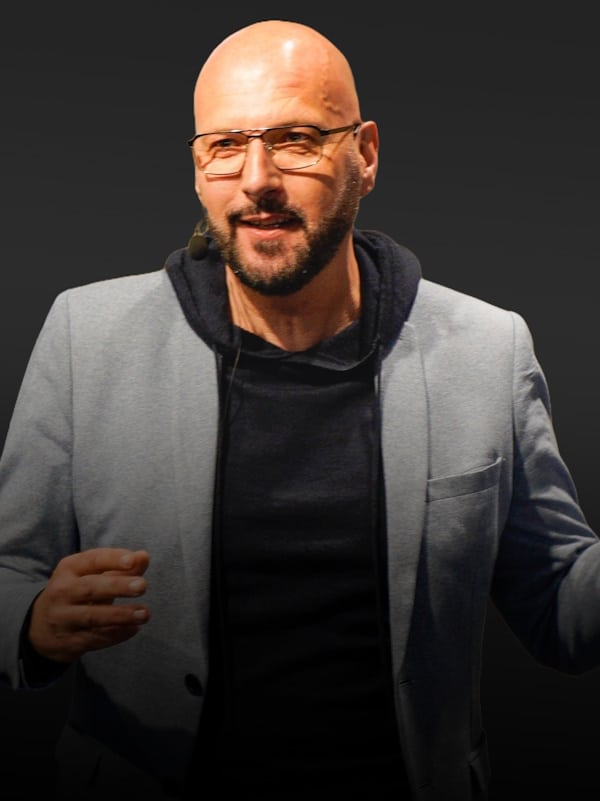
Ajuna Soerjadi

Ajuna Soerjadi was elected as the first Young Thinker of the Nation at the age of 17, due to her talent for making complex societal issues accessible to a broad audience. She focuses on urgent ethical and societal issues surrounding AI.

Languages:
Employability:
Dagvoorzitter,Keynote spreker,Webinar,Workshops
Employability:
Dagvoorzitter,Keynote spreker,Webinar,Workshops,

Specialist Subjects

1. Ethical and Societal Challenges of AI

Just because something is technically possible, does not mean it is desirable. From her background as a data ethicist, Ajuna Soerjadi sheds light on the most pressing ethical and societal challenges that AI brings. Consider issues surrounding bias and dependence on Big Tech, but also the broader, less visible societal impact of AI that already has far-reaching consequences for people, such as structural inequality, the impact on work, and sustainability.

With many concrete examples, she makes these consequences tangible. Through Ajuna Soerjadi, you will forever view AI differently and learn what is needed for AI that supports our shared values instead of undermining them. So that it contributes to a future we can all look forward to.

2. Bias, Discrimination, and Diversity in AI

AI is not a neutral tool but is inextricably linked to social context. AI learns from data, which is a reflection of society, including all ingrained patterns of inequality. AI can thus unconsciously reproduce and even amplify inequality. Some groups of people reap the benefits of AI, while others bear the burdens.

From her research experience on discrimination by AI, she explains in an accessible way what mechanisms lie behind AI bias, what concrete impact this has on people, and how we can ensure AI that is inclusive and works fairly for everyone.

3. Philosophy and AI

What makes us human in times of AI, as the boundaries between human and machine increasingly blur? Can AI ever surpass human intelligence? What does it even mean to encapsulate intelligence in a machine? Who is responsible if AI makes a mistake, and how do data relate to reality?

From philosophical disciplines such as cognitive philosophy and ethics, Ajuna Soerjadi offers a unique perspective on the philosophical questions that arise with developments in technology and AI.

4. AI Literacy

Ajuna Soerjadi offers a sober and realistic perspective on what AI is, what it can do, and what it cannot do. AI can feel like something new, complex, and elusive, and it can be challenging to separate sense from nonsense amidst all the tech hype or doom-mongering. Ajuna provides a grasp on AI by demystifying it, showing that AI is not a magical black box but a human-made system.

She explains in understandable language how it works, without delving into technical details, and how you can use it without losing sight of humanity. She enables her audience to make better, future-proof, and human-centred choices regarding AI.

5. The Hidden Costs of AI

Not all risks of AI are directly measurable. Besides hallucinations or wrong decisions, there are many less visible costs behind the technology. These costs include the enormous energy and water consumption of data centres, the dependence on a few American companies that are increasingly amassing power, the shift from democracy to an algocracy, and the exploitation of clickworkers who perform the dirty work behind our AI systems for a pittance. These costs often remain out of sight but certainly determine who benefits from AI and who pays the price.

Ajuna Soerjadi makes these hidden costs concrete and tangible and shows how we can choose AI with an eye for sustainability and justice.

6. The Value of Privacy

Privacy is often dismissed as something for people who have something to hide. But in fact, privacy concerns us all. In times of AI, privacy protects us against companies that monitor every click, against governments that want to endlessly optimise at the expense of the human scale, and against a culture where everything must be measurable. The Social Dilemma already showed how every data stream ensures that people can be influenced and manipulated without them realising it.

Privacy is not just about sensitive personal data but about all the data we continuously leave behind. We must be able to use technology without it meaning that our privacy is dead. When we defend privacy, we defend the ability to be human without being continuously watched, profiled, or manipulated. We defend freedom, autonomy, and authenticity. A society where deviation is allowed to exist and mistakes do not immediately have lifelong, Kafkaesque consequences because the data streams take on a life of their own.

Videos

4 manieren waarop AI onrecht versterkt | Ajuna Soerjadi | TEDxHaarlem

4 manieren waarop AI onrecht versterkt | Ajuna Soerjadi | TEDxHaarlem

S06E41 - In gesprek met Jonge Denker des Vaderlands en AI-ethiekexpert Ajuna Soerjadi

S06E41 - In gesprek met Jonge Denker des Vaderlands en AI-ethiekexpert Ajuna Soerjadi

Enthusiastic about Ajuna Soerjadi?

Request quote