About
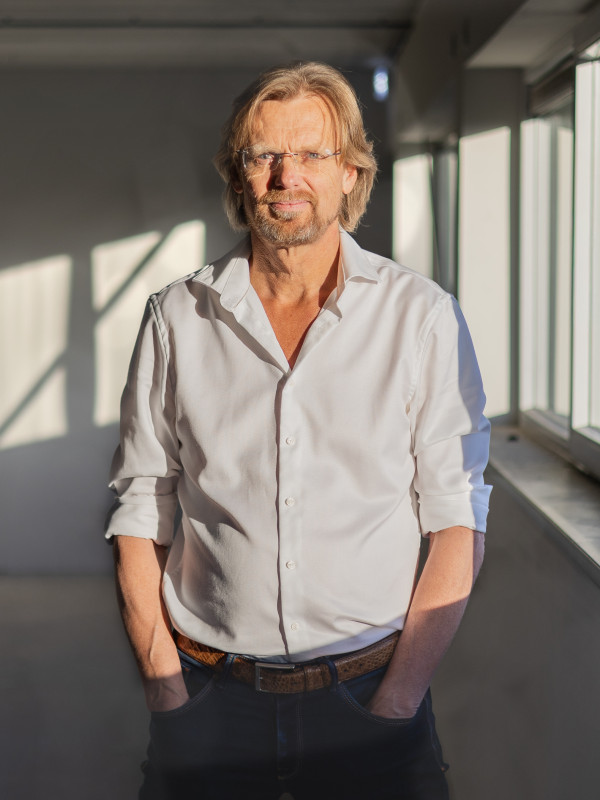
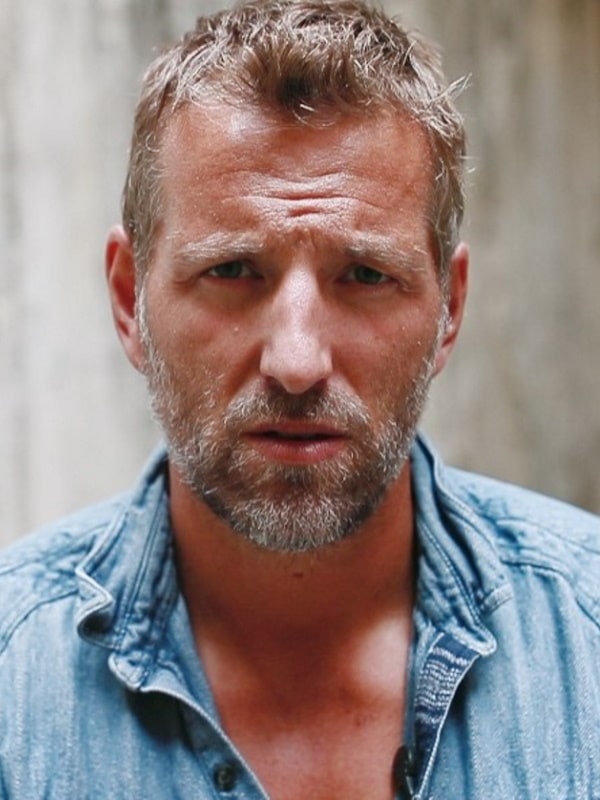
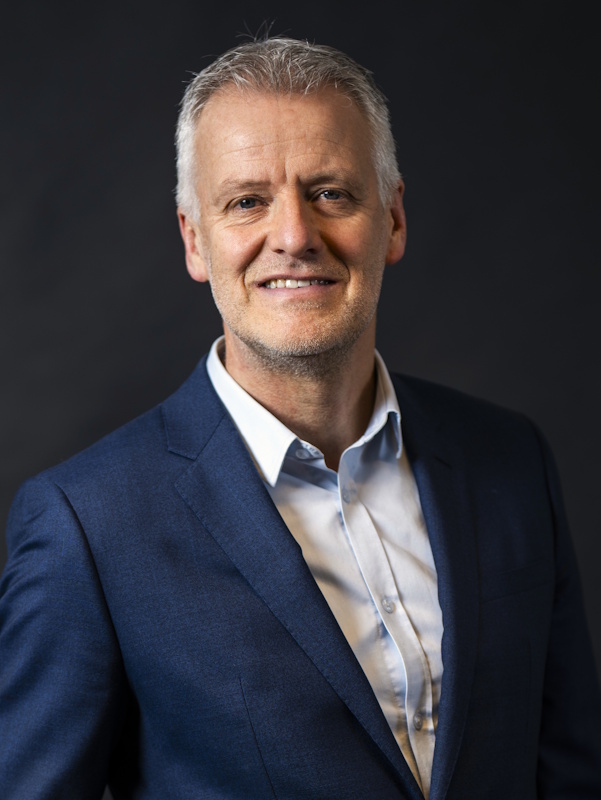
Jan van der Spoel
Organisations are massively investing in AI and digitalisation to become more agile. But technology solves little if your people are stuck with each other.
Leadership has fundamentally changed in recent years. Decisions need to be made faster, with less certainty and greater consequences. The result is that leaders dare less. They avoid risks, postpone choices, while new competing technologies do push through.
Research shows that organisations with a high degree of trust are worth 4× more, make about 30% more profit and retain over 80% of their employees longer.
Jan van der Spoel shows that the real blockage rarely lies in strategy or structure, but in invisible trust patterns within teams. Patterns that no one explicitly names, but that do determine how decisions are made, how openly dilemmas are discussed and how agile an organisation really is. With his 360° Trust Compass™ – described in his book 360° Trust – Jan makes these patterns visible and manageable. Not as a soft theme, but as a concrete moral and strategic compass: it shows where you stand, where tension lies, and why change stalls or accelerates.
Jan is trained as a concept designer and worked for over 25 years as a creative director for brands like Unilever, Philips and KNVB. There he learned to dissect complex issues and translate them into clear concepts. He applied that approach to trust: from invisible to visible, from abstract to workable.
What this means in practice:
For C-suite: see how trust patterns block or accelerate your strategy and which interventions really make a difference.
For management teams: learn how to help your people perform better by consciously using trust – in coaching, development and team management.
For professionals: work becomes more enjoyable, collaboration more pleasant and results better – without endless meetings or unclear relationships.
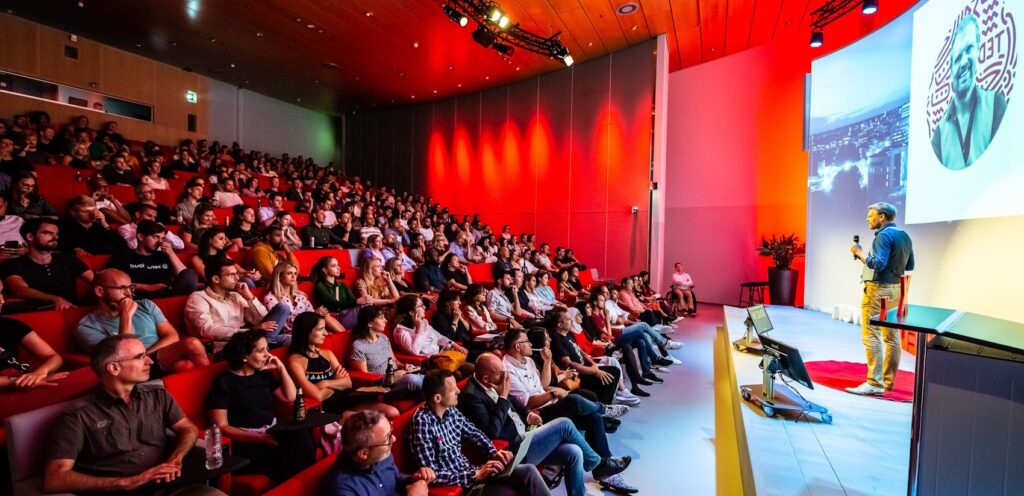
As a speaker, Jan does not bring abstract theory, but direct clarity. His keynotes and masterclasses provide leaders and teams with concrete insights they can apply immediately: which patterns block them, where trust is under pressure and which initial interventions have the most effect. No inspiration without tools, but a workable compass for decision-making in complex environments.
Jan speaks for boardrooms, leadership teams, management events and large conferences. Each keynote and workshop is fully tailored to the theme of your event and the specific challenges of your audience. Available in Dutch and English.
1. AI makes your organisation agile, but trust makes you resilient. [NEW]
AI makes your organisation agile. But agility without resilience is nothing more than organised chaos. Trust makes the difference. Every organisation is under pressure to move faster, automate more, and deploy AI. Rightly so. But the organisations that truly thrive are not only those that embrace new technology. They are the organisations where people trust each other enough to use that technology well, to adjust when things go wrong, and to stay connected when everything changes.
In this keynote, Jan shows that trust and AI are not competitors, but reinforce each other. Discover how to build the human foundation that makes technology work, and how to create an organisation with the principles of trust that is not only faster but also stronger.
2. What leaders can learn from the world of BDSM. [NEW!]
From the outside, BDSM seems like an obscure collection of activities practised in secret by a small group of people. But behind that exterior lies something else: a practice that handles power, trust, and responsibility with extreme care. Boundaries are explicit, agreements clear, consent is explicit, and anyone can hit the brakes. Not to frustrate, but because cooperation without that framework is simply not safe.
Precisely that makes BDSM a surprisingly powerful lens to look at leadership. In organisations, power and interests are just as unequally distributed, but these differences are rarely expressed. And just as a submissive can only surrender when they feel seen and safe, employees want to be able to be loyal to their work and employer. It is the same mechanism: you place your fate in the hands of another, trusting that they will handle it carefully. It is pleasant to be well-led.
In this keynote, Jan shows how trust is not a by-product of good behaviour, but something you organise structurally. The result is an accessible and stimulating session that gives leaders a new perspective on trust, power, consent, and leadership.
3. How do you increase trust without changing your organisation?
In this keynote, Jan explains how important strong relationships within organisations are. Truly effective collaboration makes the difference between hassle, sluggishness, and resistance on one side, and success, speed, and job satisfaction on the other side. Discover how trust works in organisations, how you assess it, improve it, and make it part of your daily work. Trust is not an emotion and not a soft skill; it is the oil between the gears. You will receive concrete tools to make trust visible, measurable, and manageable.
4. Leadership in a VUCA and BANI world
In a world that is becoming increasingly complex and unpredictable, leadership is more important than ever. But how do you successfully navigate through the VUCA world full of volatility, uncertainty, complexity, and ambiguity? Or through a BANI world that is brittle, anxious, non-linear, and incomprehensible? A possible answer lies in cultivating 360° trust.
In this keynote, you will discover how the principles of trust serve as a moral compass that helps you make better decisions. You will learn practical strategies and insights that you can immediately apply to build a more resilient organisation.
5. Why Most New Leadership Positions Fail (and How to Prevent That)
In this keynote, Jan highlights the worrying state in which many companies find themselves today: 60% of new managers fail within 18 months, 50% of executives halfway through their careers are not engaged and are heading towards burnout, 40 to 60% of CEOs do not last longer than 18 months in a new position, and two out of three female managers leave the business world entirely. Why is that, and more importantly, how can we turn the tide?
Jan explores the underlying causes behind these alarming figures and offers a fresh perspective on how trust can be the key to reversing these trends.
6. Female leadership in a man's world
As the son of a mother who studied law at a later age and earned a doctorate on the subject ‘Motherhood and Work’, Jan rightly calls himself a feminist. Male behaviour is still the norm in the business world. Unconscious patterns still make it more difficult for women to earn respect and build successful careers. It is rarely intentional, but it is the reality.
In this keynote, Jan shares his insights on the dilemmas of female leadership, on how to break through the glass ceiling and how to stay true to yourself in the process. A powerful session for women, and indispensable for male leaders.