This site requires JavaScript to render the code.

Need to know how to enable JavaScript? Go here.

Speakers
© Walter Kallenbach
Former Member of Parliament & Tech Expert

Kees Verhoeven

Kees Verhoeven, former Member of Parliament, is a Tech Expert, author, and advisor in the field of digital technology & AI, geopolitics, democracy, and behavior. As an entrepreneur, he advises governments, industries, and companies on the effective and ethical use of technology.

Languages:
Employability:
Dagvoorzitter,Keynote spreker
Employability:
Dagvoorzitter,Keynote spreker,

Specialist Subjects

1. The impact of technology and AI on geopolitics, the international legal order and the democratic rule of law

The year 2025 has mercilessly revealed that digital technology is a crucial power factor. Big Tech imposes its will on the world with internet satellites, media platforms, cloud services and AI tools. China increases its global influence through raw materials, rare earth metals, semi-finished products and hardware.

In his aggression towards Europe, Putin increasingly deploys digital weapons of war, cyber sabotage/spying and online interference. Autocratic great powers rapidly dismantle the international legal order to replace it with a world of spheres of influence. But democracy is also under pressure from within in the digital age.

Populists succeed in using social media channels as an extension of disinformation, intimidation and polarisation. Surveillance systems penetrate ever deeper under the skin of citizens. To tame the digital beast, we must first look it squarely in the face. That is precisely what this ultimately optimistic lecture is about.

2. A sovereign Europe in a cynical world of digital power politics

Europe has become dangerously dependent on foreign great powers in the field of digital technology. In a world governed by technological power politics, Europe will need to carve out a new position on the world stage. This requires defence capacity, cyber security and system resilience but also new competitiveness and more innovative strength.

To be sovereign amidst America, China and Russia, Europe will need to structurally reduce its dependence on energy, raw materials, hardware and production. In addition to legislation that imposes requirements on others, the EU will need to invest in technology, the AI industry, digital infrastructure, innovative ecosystems and entrepreneurship.

This is a major challenge with various dimensions:
– Daring to choose a European path that is strong, social and clean.
– A leading role for the Netherlands as a digital frontrunner and internet hub.
– Democracy as a powerful foundation and not as a bureaucratic weakness.
– Political leadership with vision, courage and patience.
– A connected community with responsible citizens and companies.

3. From data-driven to value-driven organisations

Digital technology, data and AI offer great opportunities for a better society, more productive organisations and more creative people. But only if the use of digital resources is both effective and ethical. In that sense, the internet, the smartphone, social media and also the current AI revolution have taught us valuable lessons: after the dotcom crisis in 2000, the internet increasingly revolved around commercial data profiles; the smartphone made us always reachable but also constantly distractible.

Social media connected us worldwide but now increasingly divide us, at the expense of a shared reality. And while AI with its fantastic possibilities is not yet visible in productivity figures, it is a source of theft, disinformation and deepfakes. Robots, webcams and drones also have clear downsides alongside opportunities. To achieve positive results and structural added value, it is necessary to base the speed, direction and limitation of technology on humane principles and public values. In this concrete session, Kees Verhoeven demonstrates with a practical model how organisations, both public, private and corporate, can give content and form to this.

4. The psychology behind technology: human use of AI and data

We are trapped in our inbox, held hostage by our mobile phone and guided by web design and algorithms. Cameras record us everywhere, our personal data is casually stored in the cloud and the software we use makes all sorts of choices for us without asking. Forty years ago, globalisation and digitalisation began to improve our living environment but also to change our humanity. This has largely happened unconsciously and automatically, and it is time we reflect on certain choices made for us.

It is time to unmask the human psychology behind digital technology:
– Why do you experience stress, muscle tension and sweat attacks on a booking website?
– Why does fake content still have an impact when you know it is not real?
– Why does a debate, discussion or dialogue on social media unfold completely differently than on a real village square?
– Why do you keep scrolling even though you know you will regret it?
– Why do we talk about computers as if they are people and use terms like virtual, cloud and cyberspace for the physical side of the internet?

In this lecture, Kees Verhoeven exposes various cognitive errors in the digital age, with the aim of becoming more human in the digital era. Eye-openers and laughter guaranteed!

Videos

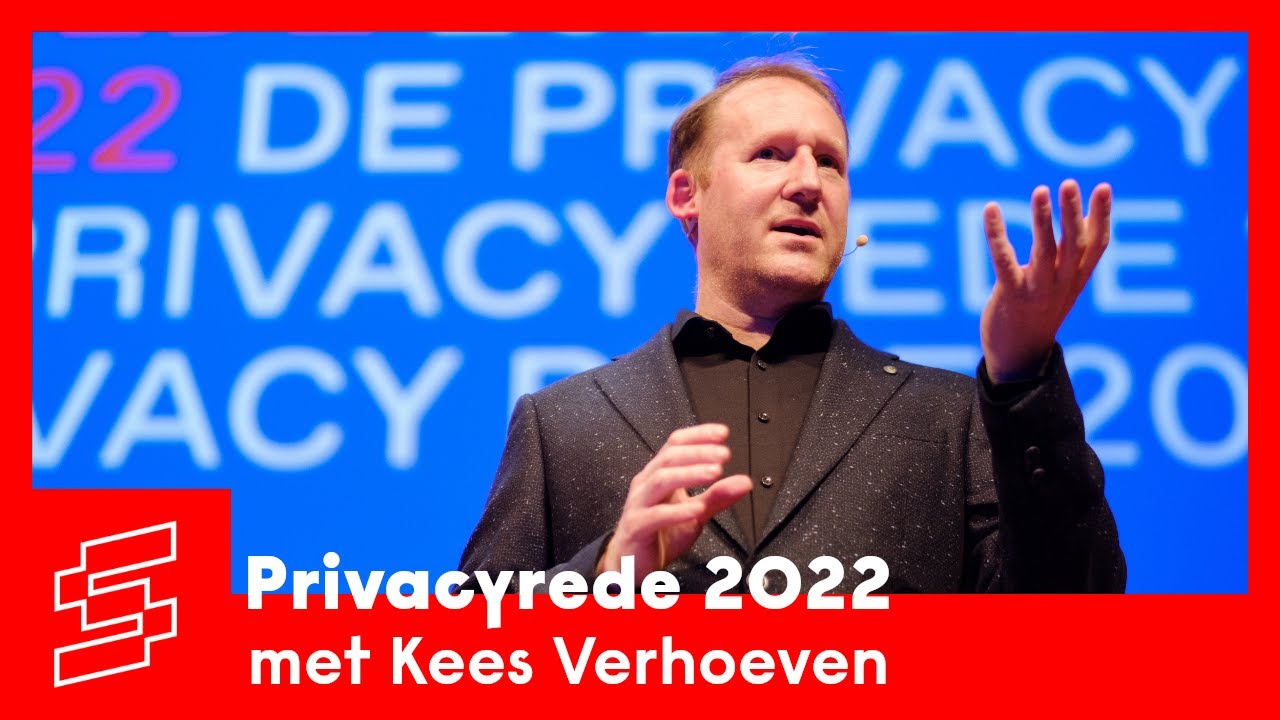
Privacyrede 2022 met Kees Verhoeven

Privacyrede 2022 met Kees Verhoeven

ABN AMRO Lecture - Kees Verhoeven

ABN AMRO Lecture - Kees Verhoeven

Enthusiastic about Kees Verhoeven?

Request quote