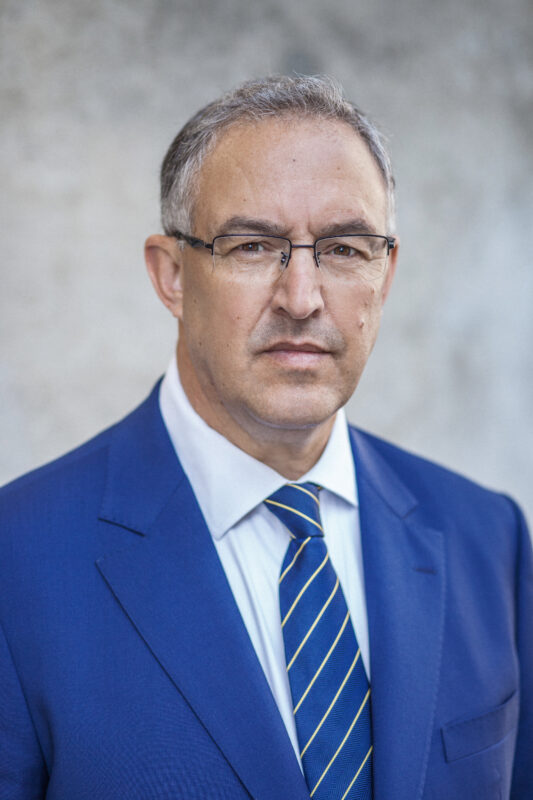
Daniel Cohen is a graduate of the École Normale Supérieure, a qualified mathematician, and holds a doctorate in Economic Sciences.He is currently a professor of economics at the École Normale Supérieure in Paris and at the University of Paris-I (Panthéon-Sorbonne). He is the director of one of ...
Daniel Cohen is a graduate of the École Normale Supérieure, a qualified mathematician, and holds a doctorate in Economic Sciences.
He is currently a professor of economics at the École Normale Supérieure in Paris and at the University of Paris-I (Panthéon-Sorbonne). He is the director of one of the most prestigious research centers in France, CEPREMAP (Center for Economic Research and its Applications), specializing in the interface between economic research and public administrations. He is also a member of the Council of Economic Analysis for the Prime Minister, and an associate editorialist for the newspaper Le Monde. In 2007, he co-founded the Paris School of Economics, of which he is still the vice-president.
Daniel Cohen has been a member of the Institut Universitaire de France, co-director of the International Macroeconomics Program at the Center for Economic Policy Research (CEPR) in London, and a member of the Council of the European Economic Association.
A specialist in international debt issues, he was an advisor to the Bolivian government with Jeffrey Sachs in 1985, a consultant to the Bank of France (1986-1988), a consultant for the TACIS Program at the Central Bank of Russia for the European Commission (1992-1997), a consultant to the World Bank in the external debt division (1984-1997), a member of the Macroeconomics and Health Commission (led by Jeffrey Sachs), and co-director of the working group “Health, Economic Growth, and Poverty Reduction” with George Alleyne (2000-2001).
Daniel Cohen has written numerous books and reports. He was named “Economist of the Year” in 1997 for Richesse du Monde, pauvretés des nations, which received the 2000 Economic Book Prize, the Léon Faucher Prize from the Academy of Moral Sciences, and sold over 25,000 copies. His book Nos Temps Modernes received the Synapsis Prize for “Mutations and Work,” and La Prospérité du Vice topped the sales charts in the essay category for several weeks, with over 80,000 copies sold.