This site requires JavaScript to render the code.

Need to know how to enable JavaScript? Go here.

Speakers
© Nico Kroon
An orchestra is just like a business, but much more intense

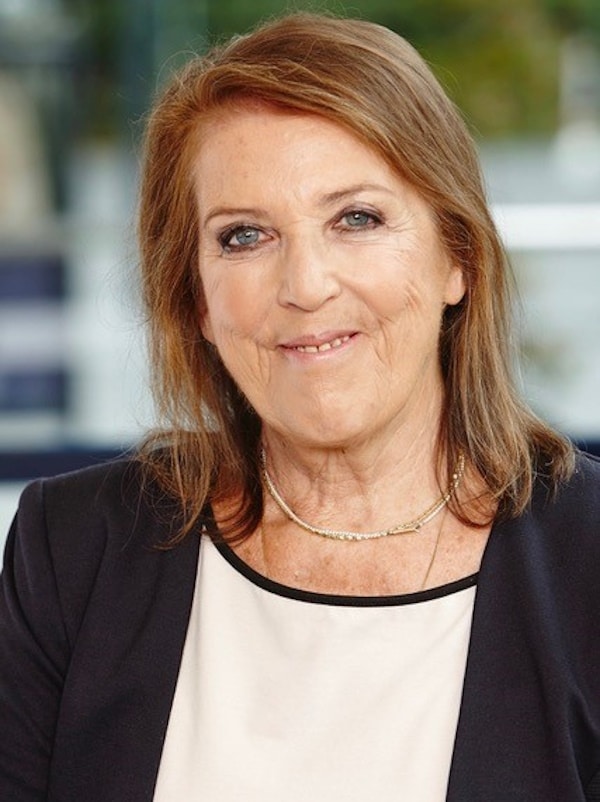
Aukelien van Hoytema

Aukelien van Hoytema is the head of the Cultural Programs department at Radio, and thus of TROS Radio 4. On Saturdays from 9:00 AM to 11:00 AM, Aukelien van Hoytema produces the program 'A Good Morning With' on Radio 4, in which a well-known Dutch person explains their choice of classical ...

Languages:
Employability:
Keynote spreker,Presentatrice
Employability:
Keynote spreker,Presentatrice,

Specialist Subjects

1. Team Playing

The very best example of team playing is performing in a string quartet.
The players are completely dependent on each other for producing a piece of music, but the leader is usually the first violinist, although the other players (2nd violinist, violist, and cellist) can temporarily take the lead.

The better and more accurately the members of the string quartet are attuned to each other, the more successful their performance. For this, flexibility, adaptability, and especially listening to each other are of great importance. Regarding the direction of the artistic concept, “everyone must be on the same page.” Much discussion can arise about this in advance.

Spending a long time together can be a cause of irritation. There are countless examples and anecdotes of this, but there are also examples of string quartets that endure for decades.

2. The Conquest by Women of Male Professions in Music

Lately, you see them more and more: women as conductors or composers. How has this come about, and why has it been such a long journey?

In the relatively recent past, women could not become professional musicians, according to their fathers and brothers (Mozart and Mendelssohn). Singers, those men could not do without, but it was considered a dubious frivolous profession.

The last male bastions, conducting and composing, are now being conquered, just like careers in physics or in governance.

In the past, it was the barriers of decency or the belief that they were not capable of having authority; now, the STEM subjects still pose those obstacles.

Yes, composing is to a large extent a STEM subject.
When will it finally be truly “normal”: that woman as a conductor, composer, or professor of theoretical physics?

3. Internationalisation; what does it bring us when we look at Dutch musical life and our music education?

Just like the universities, the conservatoires are filled with foreign students. Often, they are even in the majority.

So far, this has elevated the musical life in our country to a much higher level. With, of course, always the individual exceptions aside, the quality of the average music student was not of the towering high level as, for example, students from Eastern Europe. This meant that when students from those countries came to our country, they often had a much higher level, certainly technically. Often even higher than the Dutch teacher with whom they studied here. Some teachers from abroad who came to teach here imposed more discipline, and their pedagogical talents were such that the level at the Dutch conservatoires became increasingly higher.

This has had a very positive impact on our musical life. To what extent can this serve as a model for other segments of society, and how harmful is it to oppose such movements.

Enthusiastic about Aukelien van Hoytema?

Request quote