About
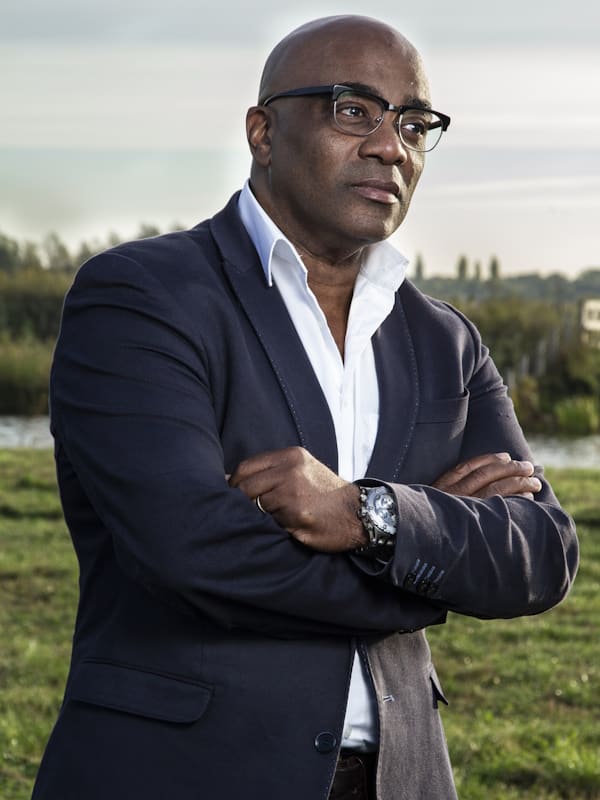
Andro Vos
Andro Vos is the founder and CEO of the Wildlife Forensic Academy and a leading voice at the intersection of science, security, and nature conservation. In his powerful keynote, he reveals how a seemingly unattainable Dutch ambition grew into an international movement at the forefront of the fight against wildlife crime.
With sharp insights and compelling stories, he takes his audience into a world where idealism and reality collide. He speaks about visionary leadership under pressure, the courage to challenge established systems, and the ability to create sustainable impact in complex geopolitical arenas. Themes such as innovation power, strategic public-private partnerships, resilience, and moral courage form the common thread.
The Wildlife Forensic Academy transforms the approach to poaching and illegal trade in protected species by integrating forensic science, investigation, and nature conservation into one effective whole. In collaboration with more than thirty international universities and partners, the Academy trains professionals and students who operate on the front lines of high-risk and high-impact missions.
Vos has spoken at TEDx Binnenhof, collaborated with CNN, and advises governments and international security organizations, including the U.S. Department of Homeland Security.
1. Storytelling
Here, Andro tells the incredible story of the Wildlife Forensic Academy.
A 13-year development and realisation that started at the Netherlands Forensic Institute. A single question at Stellenbosch University in South Africa changed his entire life. A life-threatening armed robbery and the murder of four rhinos led to a complete transformation. Namely, the development of the world’s first wildlife forensic academy.
2. Inspiration
The story of the Wildlife Forensic Academy is inspiring. It shows how you, as a professional, can make a difference. How inspiring is it when Dutch knowledge leads to a true innovation that halts the ruthless poaching causing animal extinction and prevents diseases like EBOLA, AIDS, and COVID from being transmitted to humans. Forensic knowledge in the field of human crime scenes is transformed into knowledge that is successfully used to solve and prevent poaching. We achieve this through the realisation of a globally unique training facility and business model for nature conservation.
3. How can I achieve my goals
The construction of the Wildlife Forensic Academy began with a dream… But dreams alone achieve nothing. Concrete goals must be set. By working hard and with iron discipline, these can also be realised. But with a good plan and clear business case, you are not there yet. You will need to look at yourself, as a person, and ask yourself if you are ready to step out of your comfort zone. That safe, warm place where you know everyone and where everything goes by routine, where your certainties are guaranteed.
4. Sustainability
We, as humanity, must pull out all the stops to restore and protect nature. It is our moral duty to take responsibility for the earth and everything that lives on it.
Especially in African countries, a huge disaster is unfolding. Often commissioned by Asian countries, poaching occurs. No animal is spared. It involves the plundering of plants and trees, sea life, and virtually all animals living on land. If we act quickly, in 30 years, no living wild animal will be found in the African countryside. This will have enormous consequences for the biodiversity and habitability of our planet.
5. Serious organised crime
Wildlife crime is the most severe form of organised crime after drugs, arms, and human trafficking. According to World Bank figures, the total scale is estimated between 1 and 2 trillion dollars. The chance of apprehension for this form of crime is low, and the profits are very lucrative. If you kill an elephant or rhino, you have ivory or a rhino horn, which is an asset you can trade for drugs, money, weapons, and even finance terrorism. Wildlife crime is thus a facilitating form of organised crime. It supports all other forms of crime because they use wildlife crime routes that are uncontrolled by the police.