Over
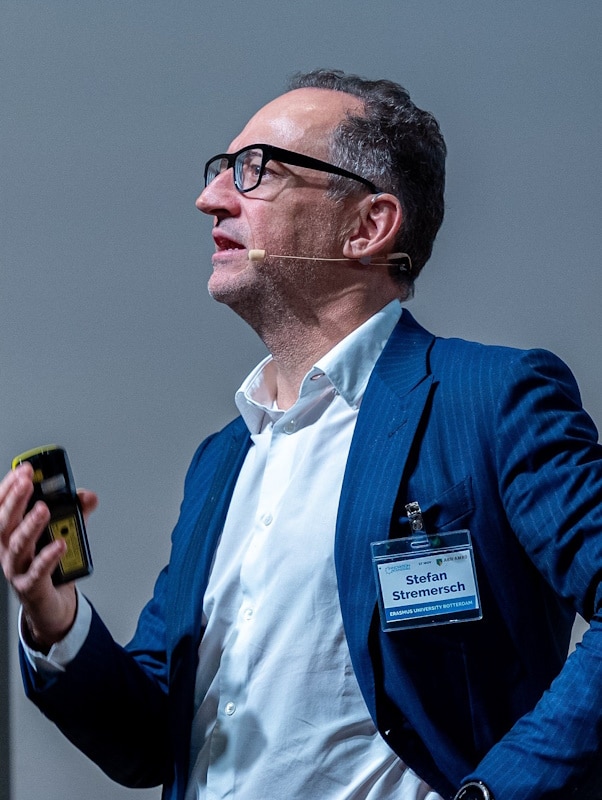
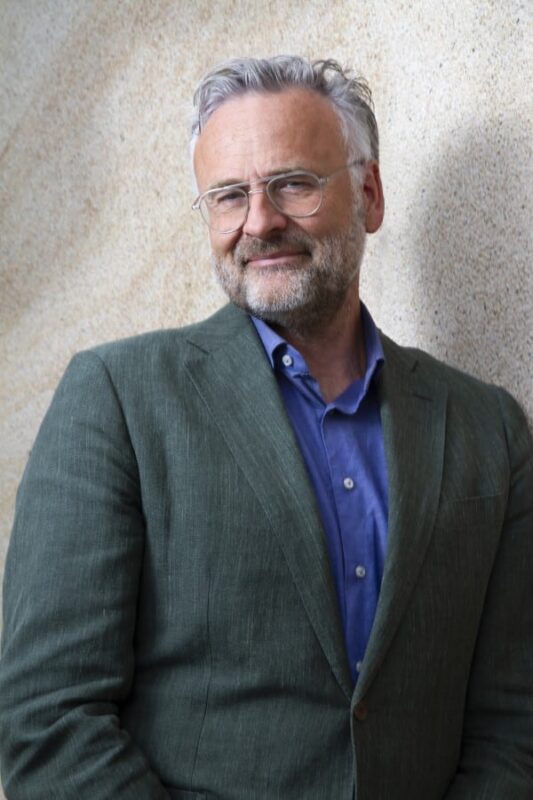
Stefan Stremersch
Stefan Stremersch is hoogleraar aan de Erasmus School of Economics van de Erasmus Universiteit Rotterdam en aan de Universiteit Gent. Stremersch heeft meer dan 50 wetenschappelijke artikelen gepubliceerd in toonaangevende academische tijdschriften, waarvan enkele werden verkozen tot beste van het jaar. Hij ontving diverse carrièreprijzen van de American Marketing Association (AMA), de European Marketing Academy (EMAC), de Maatschappij voor Opinieonderzoek (MOA), de Hollandsche Maatschappij der Wetenschappen, de Koninklijke Nederlandse Akademie van Wetenschappen (KNAW) en de Francqui Stichting. Hij verwierf meer dan 6 miljoen euro aan competitieve onderzoeksfinanciering. Hij bekleedde faculteitsposities aan andere universiteiten en business schools, zoals IESE Business School, Duke University en Emory University, en doceerde op alle niveaus van het hoger onderwijs. In 2001 behaalde hij zijn doctoraat aan de Universiteit van Tilburg met de hoogste onderscheiding (top 2% van alle Tilburgse doctoraten) en was hij gastonderzoeker aan UCLA en de University of Southern California.
Hij is de oprichter van MTI², een spin-off van zijn academische carrière. MTI² stelt mensen en bedrijven in staat om hun innovatiepotentieel om te zetten in commercieel succes. Dit gebeurt in drie domeinen: innovatie, marketing en sales. Op deze gebieden levert MTI² advies, training en projectimplementatie. Tot de huidige en voormalige klanten behoren vele toonaangevende bedrijven in hun respectievelijke sectoren: Aliaxis, Baloise Insurance, Barco, Baxter, Bio-Techne, Boehringer-Ingelheim, Caesar Group, Dechra, Grünenthal, GSK, KLM-AirFrance, Merck, Michelin, Novartis, SABIC, Sanofi en SKF, onder andere. MTI² ontving ook diverse subsidies van het Vlaams Agentschap voor Innovatie en Ondernemen en is een preferred partner voor innovatieactiviteiten bij wetenschappelijke organisaties zoals de Nederlandse Organisatie voor Wetenschappelijk Onderzoek en universiteiten zoals de Universiteit Gent, de Universiteit van Münster, de Universiteit van Basel en de Universiteit van Luik, onder andere. Stremersch en zijn vrouw leiden ook een familiebedrijf van de tweede generatie in België, waar zij – met de voeten in de klei – het innovatietalent van bijna 100 medewerkers ontwikkelen.
Stefan is in zijn “vrije” tijd een gepassioneerd duuratleet. Hij loopt (ultra)marathons en lange afstand duatlons en triatlons. Hij is op zijn best een gemiddelde atleet in deze disciplines, met als hoogste prestatie een top 10-plaats in zijn eigen leeftijdscategorie op het Wereldkampioenschap lange afstand duatlon (Zofingen). Hij finishte al zijn wedstrijden, op één na, meestal ergens in het midden van het peloton, maar altijd met een glimlach en soms met kippenvel.
1. Architect your talent adventage: how to develop the innovation potential of your people and yourself
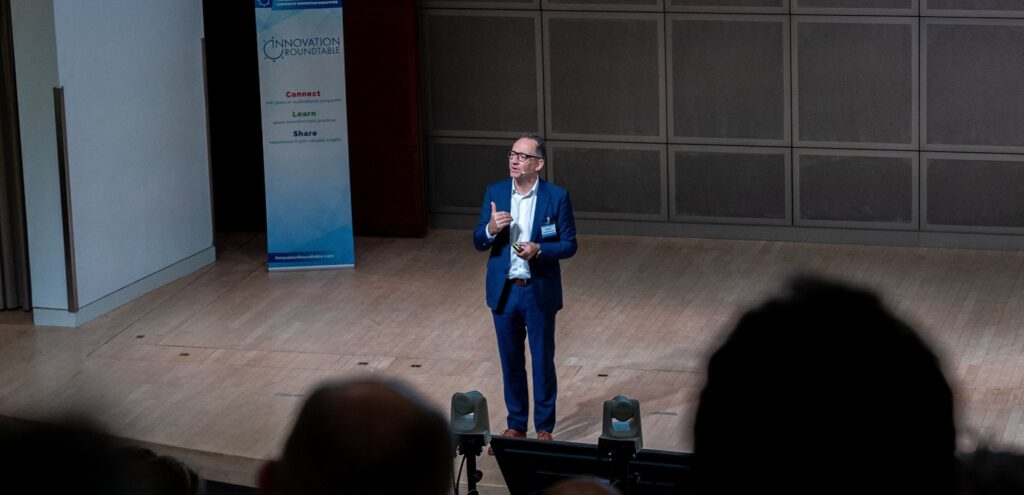
In this talk, Stefan brings the key insights from his new book “The Talent Advantage”. He challenges the conventional belief that process drives innovation: “Your people are the key and the real engine of innovation. And not just the superstars, but everyone.”
Stefan identifies three main building blocks to develop your people’s full potential:
• Purpose: Meaning moves people more effectively than money. Learn how to turn purpose into a tangible driver of performance.
• People: Which people can you develop and why? How do you motivate them? What needs do they universally have that you should deliver on?
• Proficiency: How can you develop your people to a higher proficiency level? How do you effectively use templates, tools and programs to move them up the ladder? And how can AI help humans in doing so?
If you want to make it practical, then consider complementing the keynote with a hands-on workshop. The most common workshop formula puts you on an architecting journey. On that journey, you adopt the tools in the book, such as the Innovation Wheel, to map out how you can improve the innovation competencies of your team, your firm or yourself.
Let us know how we can tailor the experience to your unique needs to craft your unique Talent Advantage!
2. Wiring innovation in the DNA of your organization
Innovation is no longer the job of the few. If you want to succeed, innovation needs to become the responsibility of many. And while innovation can be greatly assisted with Artificial Intelligence, for most organizations it is hard to automate and requires human potential to manifest itself in innovation talent.
But how do you seed innovation competencies among the many? How do you wire innovation in the DNA of your organization? In this talk, Stefan elaborates on the science behind the innovation of the many. Why does it lead to strong innovation results and how did it drive human ingenuity? And how can it be governed and led? What is required of leaders in terms of transformation to harvest on the innovation potential of anyone and turn them into business results?
Beyond the talk, if you take the walk, Stefan builds together with you your roadmap how to make this happen in your organization. In this way, you will harvest concrete ideas that you can start implementing the day after.
3. Customer insights for innovation in the age of AI
Customer insights are critical to drive front-end innovation to commercial success. Stefan introduces powerful, but often overlooked, methods to incorporate customer insights into the innovation process. He brings novel inspiration on the use of small data versus big data. And he explores how you can use GenAI beyond synthetic customer personas. Expand your keynote with a roundtable workshop on the ‘Customer Insights Wheel’. With this collaborative tool you can gain breakthroughs in how you co-create with your customers, how you can better observe them in their natural habitats, and how you can use imagination techniques to put yourself in the shoes of your customers. The Wheel also enables a deep dive in the many doors that GenAI opens for better customer insights at low cost and phenomenal speed to arrive at fast prototyping.
Assess how effective your current methods are and where to improve them. Explore the techniques to harvest customer insights beyond the obvious. Gain an improvement roadmap that makes you start tomorrow and sustain your improved customer insights activities in the future long after the workshop took place.
4. Transform your commercial capabilities to be future-proof
Many companies are changing their commercial model to be future-proof. Some aim to build higher customer-centricity. Others want to increasingly benefit from leveraging stronger data. Still others want to build strong business partnerships with their customers rather than just sell in a transactional manner. Beyond that Artificial Intelligence opens up many opportunities and risks for commercial teams.
But to change your commercial model, you need to re-align the commercial capabilities of the firm, which in many companies also boils down to upskilling commercial functions. How do you organize this upskilling in the best manner? Stefan shares examples of companies that set up their own commercial academies. How do companies set up the governance structure of such academies? How do you prioritize learning needs and training concepts? Who do you include in learning activities according to role and responsibility? How do you organize learner journeys? How do you create snackable and engaging content? In this talk, you get the best from what other companies are doing. A follow-on workshop drives it home and enables you to come together as a team which approach is right for you and what are the steps you need to sequentially take to drive this home.
5. Generative AI for customer-centric innovation
Generative AI is a real game-changer for innovation. Among surveys of leading executives, innovation is in the top 4 areas that will be affected in a major way by GenAI. In this talk, Stefan highlights which are the prime areas we see GenAI succeed as a catalyst for innovation. And… which are the areas in which GenAI seems to disappoint companies…
Expect to be inspired by how GenAI can help you strategize which innovation domains you should focus your efforts on. And how it can teach you what the customer really wants. Or, how synthetic customers can provide user feedback on prototype designs. Or, how synthetic interviewers can interview a mass of customers and categorize their feedback in a matter of hours not weeks or months. And are you already role playing sales conversations with GenAI to tell you which will be the main adoption obstacles of your innovation?
All of these questions are addressed in this whirlwind talk through the application of GenAI for customer-centric innovation. If you want to enrich the talk, you can add a tutorial workshop. In this tutorial workshop you and your team home in on one of three topics: (1) innovation domain setting with GenAI (are we homing in on the right domains or are we off and why?); (2) synthetic customer sensing (how to set up synthetic personas, how to prompt them and how to separate reality from hallucination); (3) how to sales role play with customers to discover the main adoption hurdles? Walk out with real GenAI experience under your belt on your business, with output you can directly use to steer your innovation efforts.