À propos
Christine Fitzgerald
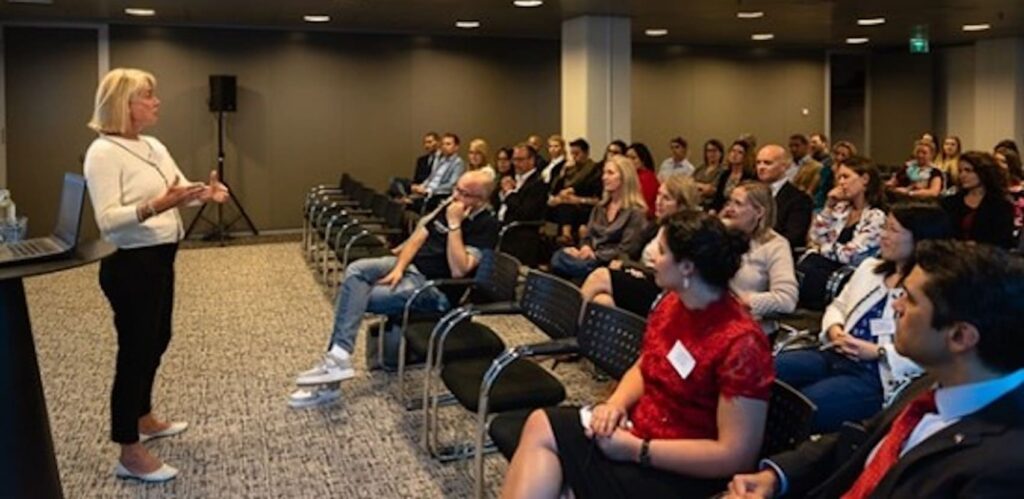
Exploiter notre plein potentiel humain, tirer parti de nos forces, vivre les meilleures vies possibles tout en créant notre avenir est l’appel à l’action que beaucoup entendent aujourd’hui. Experte en comportement organisationnel, développement des ressources humaines, leadership et psychologie positive, Mme Fitzgerald est une professeure très respectée dans plusieurs universités, écoles de commerce et une conférencière influente pour de grandes organisations internationales. Diplômée magna cum laude de Pace University, Christine Fitzgerald a obtenu sa maîtrise en psychologie du développement à Columbia University à New York. Chez Chemical Bank (actuellement J P Morgan), elle a travaillé dans la recherche marketing, la planification stratégique à long terme, la gestion de projet et la formation en entreprise.
Le pouvoir de faire un impact positif durable vient de nos ressources intérieures. Ceux qui comptent sur des sources de pouvoir externes échoueront constamment. Entrer en contact avec et utiliser le pouvoir interne crée, guérit et connecte, nous permettant d’exercer un véritable pouvoir en autonomisant les autres.
Son parcours éducatif et son expérience professionnelle en entreprise ont été le fondement de son poste actuel de Professeur Associé Senior en Psychologie et Gestion à Webster University, entre autres. Les entreprises mondiales ont bénéficié des conférences et ateliers actuels et interactifs de Mme Fitzgerald. Ses discours motivationnels et inspirants sont inscrits à l’ordre du jour des cérémonies de remise de diplômes et des journées portes ouvertes universitaires. Sa personnalité hautement charismatique et ses compétences didactiques inspirent le changement et la créativité chez son public et ses étudiants.
1. Emotional Intelligence
The capacity to connect thinking with feeling is one of the hallmarks of great leaders. They use the powerful feedback of emotions, understand and respond to nature’s life-giving messages and enhance their lives and the lives of those they engage with. Emotional intelligence is not about being emotional. It’s about leveraging essential truths and putting emotions into the equation when making professional choices.
2. Spiritual Intelligence
Spiritual intelligence is not about religion. It’s a range of human qualities that may or may not be present in our religious leaders. Those with spiritual intelligence have several capacities required for success in today’s turbulent world. It’s important to identify these capacities and then do the work of strengthening these to enhance ourselves and our personal and professional communities. Making a lasting positive impact requires spiritual intelligence.
3. Applying Lessons from Positive Psychology
Emotions keep us alive. The core emotions of fear, anger, sadness and joy have been found in all cultures and appear at birth. Positive psychology extends the psychology paradigm from focusing on managing negative emotions into embracing and enhancing positive emotions. Fear, anger and sadness are meant to be temporary, to help us survive. The core positive emotion of joy is meant to be our more enduring emotion and the experience of joy is inextricably connected to growth and creativity. Positive psychology provides numerous lessons, techniques and insights on how to live life to the fullest.
4. Tapping into Human Potential by Letting Go of Control
Control is often about fear. When things are not fully understood, situations do not appear pleasant, or our environment seems threatening, fear can be a natural reaction. The problem arises when fear and control become our default response. When triggered, we become constrictive, our perception narrows, and our creativity suffers as a result — our best selves are not being activated. Letting go of the fear default is not easy but when we stop controlling and start using our more expansive selves, growth and creativity soar.
5. Appreciative Enquiry
The process of appreciative enquiry turns problem solving into opportunity finding. By following a few prescribed steps outlined in the model of appreciative enquiry, and asking ourselves some pointed questions, we find ourselves operating in a far more productive orientation than we are In when looking for solutions. Positive change is experienced, and innovative ideas and directions emerge.
6. Reflective Time Shifting
By engaging in reflective time shifting you turn your strategic planning sessions into the more powerful experience of looking at the future from a present orientation. This change in perspective opens up possibilities that strategic planning cannot capture. Reflective time shifting requires using the emotional skill where you project your present sensibilities into the future and then bring the insights gained back to the present to be tested and implemented.