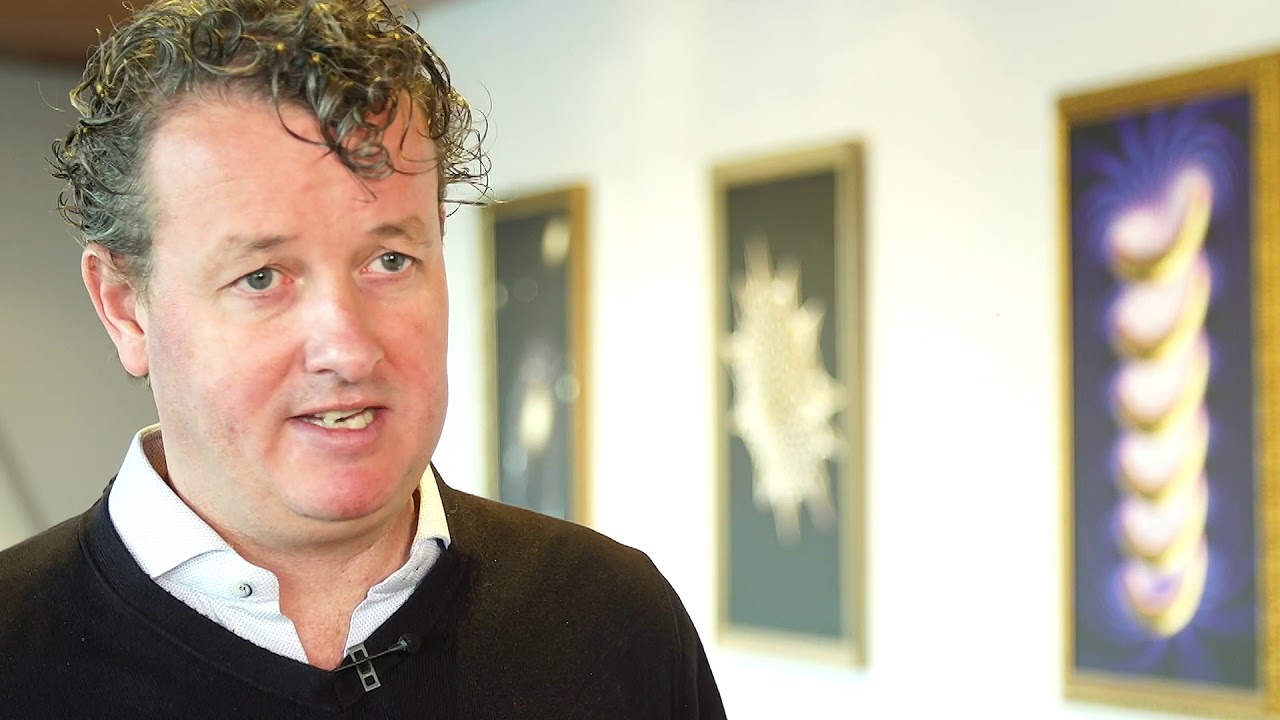
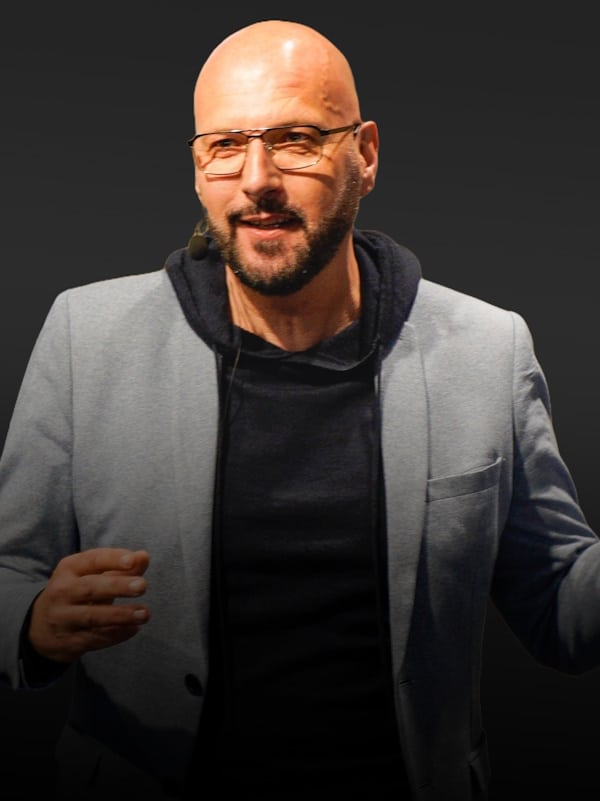
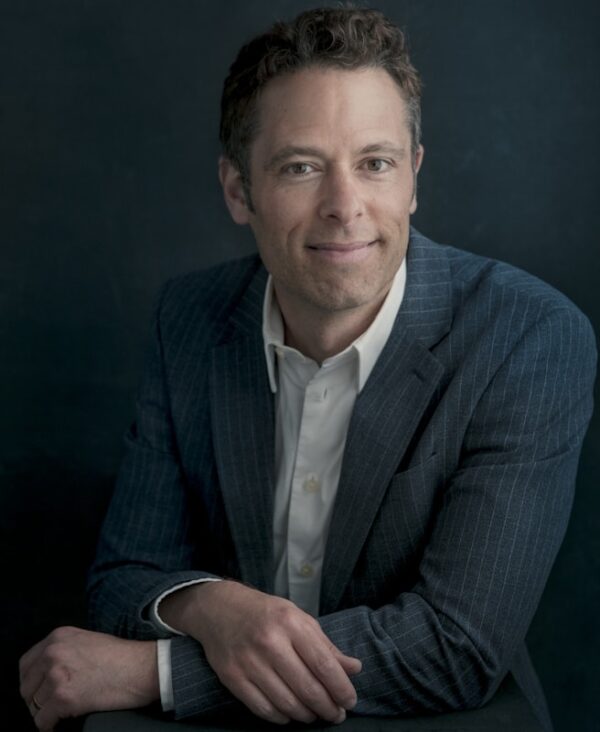
Sander Duivestein
Trendwatcher and Author
Sander Duivestein is a speaker and author on the impact of new technology.
Characteristics
- Employability:
- Keynote speaker
- Languages:
- Dutch, English
Trendwatcher and Author
Sander Duivestein is a speaker and author on the impact of new technology.
Our consultants would be happy to advise you on how best to tailor the narrative to your specific target audience.

Sander Duivestein has been researching the impact of new technology on people, businesses, and our society since 2005. On behalf of the Exploration Institute for New Technology, he has written various reports and books over the years on topics including: social media, big data, the internet of things, disruption, bitcoin and blockchain, the platform economy, artificial intelligence, and the new generation.
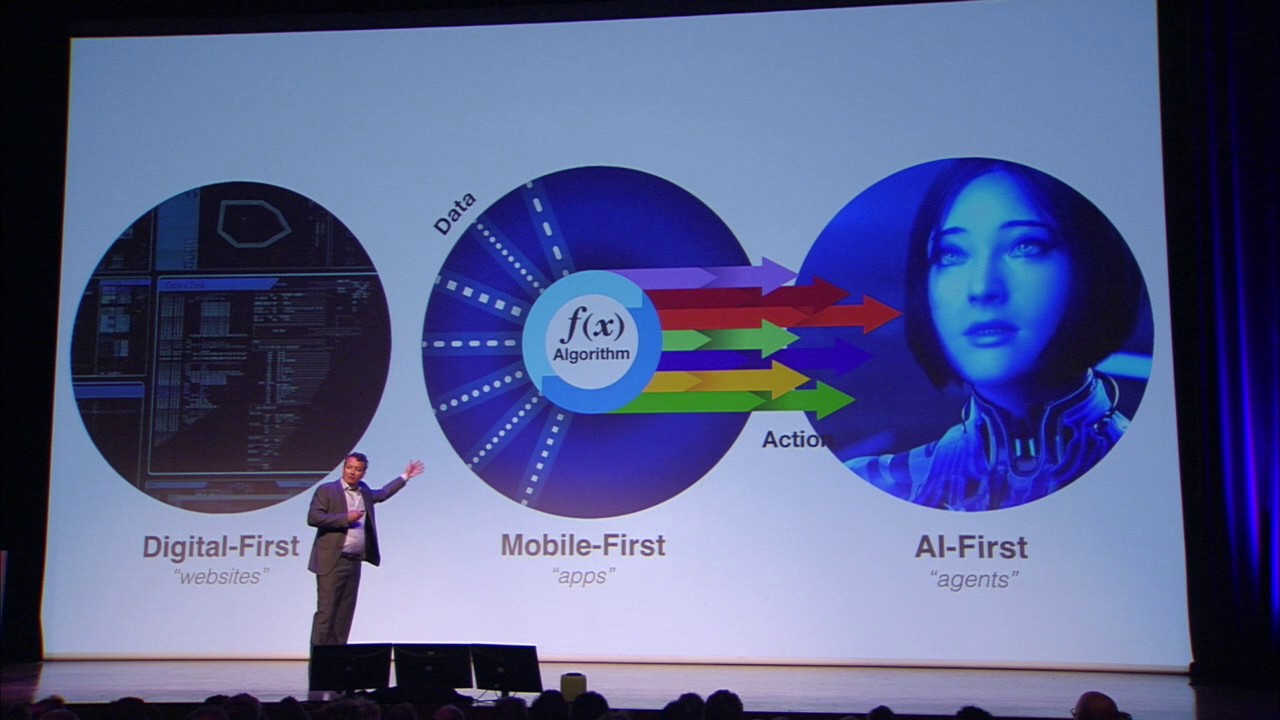
In his presentations, Sander takes you from the past to the present and offers a glimpse into the near future. Sander’s presentations are particularly visual, confrontational, and humorous at the same time. Above all, they are stories with a message. No pie-in-the-sky thinking, but a critical look at what technology is actually doing to us. Bringing Sander into your space means bringing the future inside. And that is urgently needed, because according to Sander, it is Digital Darwinism: adapt or perish!
With the introduction of the smartphone and the tablet, our society has accelerated: from linear to exponential. We consume information in real-time and 24/7. We cannot do without it anymore. Everyone is addicted to information. We constantly want to be interrupted by a text message, a WhatsApp, a Facebook post, or a tweet. Twitter, Facebook, Google, and Snapchat control our data and are the modern drug dealers of our digital consumer society.
And we are only at the beginning: artificial intelligence, virtual reality, CGI influencers, 3D printing, brain interfaces, bitcoin & blockchain, robots, big data, privacy, and the Internet of Things. All technologies that are now experiencing an exponential growth curve and are merging into each other. They reinforce each other and form a perfect digital storm that is sweeping through the business world with devastating effect.
All these new technologies leave a lasting impact on the way we collaborate and physically organise the world. No longer thinking in terms of silos and safeguarding knowledge within company walls, but rather seeking external collaboration to share knowledge and learn from each other. The future is thus the opposite of the past: we are moving from centrally controlled to decentrally organised. No wonder the lifespan of companies is decreasing at a rapid pace. Companies cannot keep up with this murderous pace. After all, companies try to maintain the problem for which they were once the solution. While companies should now adopt new technology to change themselves. After all, it is Digital Darwinism, change or disappear!
What is the impact of this digital transformation on people, companies, and society? At a rapid pace, futurist Sander Duivestein shows which trends are “hot” and which are “not” and where opportunities and threats lie for the near future.
Marrying an avatar, advertising campaigns with virtual stars, and concerts by holograms. The phenomenon of virtual celebrities and digital people is not new. In the nineties, the MTV generation was already confronted with Max Headroom. Several digital characters have now managed to reach millions of people with their talents. For example, the fully animated band Gorillaz, consisting of four cartoon characters, has already won a Grammy Award, Terre des Hommes has tracked down thousands of web sex tourists in its fight against child exploitation with the digital decoy girl Sweetie, and CGI Influencer Lil Miquela now has more than 1.5 million followers on Instagram.
In the current Post-Truth era, we all have the tools at our fingertips to create avatars of ourselves and others. With DeepFakes, we can paste the faces of celebrities onto the bodies of porn stars, with Lyrebird we can clone our voice. We thus create a hyperreality in which what is real and what is not intertwine. How will we know what is authentic and what is not? What happens to people, companies, and our society when the boundaries between physical reality and digital reality blur?
Trust in companies, government agencies, and brands has reached a historic low. Several prominent figures have fallen from grace in recent years: Volkswagen’s cheating software, bribery scandals at FIFA, Brexit, child abuse within the church, the massive hacking of credit card data at Equifax and Yahoo, #MeToo, the Paradise Papers, and at the end of 2018, the uprising of Les Gilets Jaunes against the elite. At the same time, we see that more and more people blindly trust what algorithms present to us. We get into a stranger’s car, whose driver we do not know, because Uber’s algorithms rate him highly. We invite strangers to stay overnight in our bedroom because Airbnb’s algorithms guarantee the reputation of these guests. We find our life partner with a swipe of our fingers because Tinder’s artificial intelligence matches this person to our preferences, and we transfer bitcoins to each other without the intervention of trusted intermediaries.
We are moving from centrally controlled organisations to decentrally organised networks, where advanced artificial intelligence knows our deepest needs and desires and responds to them in a human way. What does this transition mean for people, companies, and governments? Can we blindly trust the algorithms, or are they biased? What does it mean when access is more important than ownership? What does our economy look like when our digital reputation is the new currency?
Technology is neither good nor bad, but also not neutral; it depends on what people do with it. In recent years, people have developed a great fear of a new technology, namely that of artificial intelligence. Robots are taking over people’s jobs, people are becoming slaves to the machine, people the battery of the network, and according to some, it won’t be long before The Terminator wipes us off this planet.
Fear of new technology is as old as time. In a nuanced story, Sander Duivestein shows what robots and artificial intelligence are capable of and explains the consequences of these technologies for education, work as we know it, and the way we have organised our business operations.
Sociologists agree: generations are made during the so-called “formative years.” This occurs between the ages of 10 and 25. Events hit extra hard then. The frontal cortex is still developing. The stimulus centre has life in its grip. In those formative years, children nowadays develop in two ways: physically and digitally simultaneously. They know no era without the internet. The concept of “digital transformation” has no meaning for them. They have always been online; they are, as it were, “onlife.” The internet is a post-modernist candy store where any reality can be realised, but it is also a place where moral fog hangs, and they have to invent the rules of conduct themselves.
It is above all the first generation that already has a business impact before their career has actually begun. They grow up as ‘influencers’ and experiment with new media, such as Mukbang, ASMR, and eSports. They are the creators of our future and the new employees of your company. What can we learn from this new generation?
This content is available after accepting marketing cookies.
Request pricing and availability, without obligation. Our consultants will be happy to help you personally.
Our specialists are ready to match the right expertise to your goals.




Get the latest insights and trends from top experts delivered straight to your inbox every month.