British journalists will say that he led his offensive actions like a ghost! Not because he was extremely discreet, but rather because he would burst into the backline, seemingly coming from nowhere, to create space and send his winger to score. The player from Corrèze symbolized the principle of ...
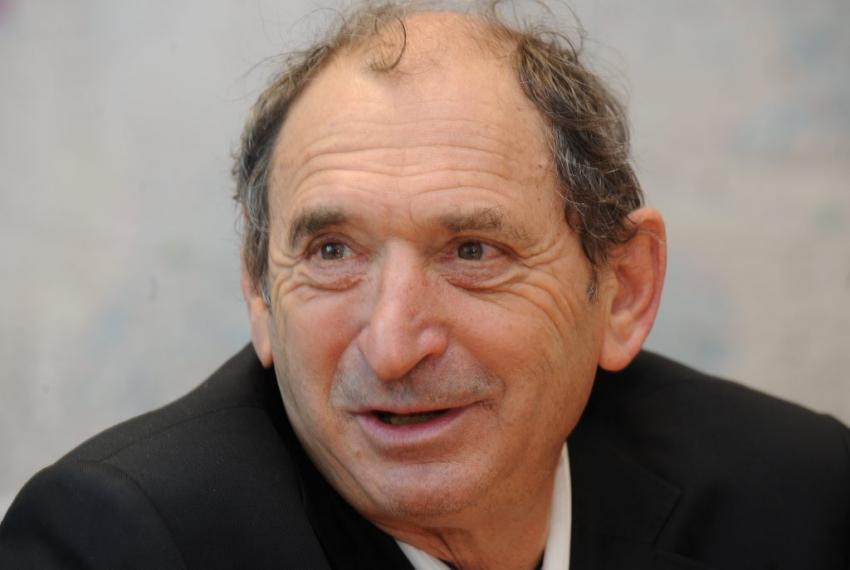
British journalists will say that he led his offensive actions like a ghost! Not because he was extremely discreet, but rather because he would burst into the backline, seemingly coming from nowhere, to create space and send his winger to score. The player from Corrèze symbolized the principle of the intercalated fullback, disrupting the classic patterns of attack. The number fifteen became something more than just the last line of defense. A revolution for its time…
Pierre Villepreux also possessed a phenomenal kicking ability that allowed him to successfully make penalties from over 50 meters. At the time, he was considered the greatest fullback of all time.
Runner-up in the French championship with Stade Toulousain in 1969, and winner of the Grand Slam in 1968, he is better known for his coaching career. He won the Oscar du Midi Olympique (best French player in the championship) in 1970, was second in 1972, and was also awarded the Prix Henry Deutsch de la Meurthe from the Academy of Sports in 1970 (a sporting achievement that can lead to material, scientific, or moral progress for humanity).
From 1982 to 1989, he coached Stade Toulousain (with Jean-Claude Skrela since 1983), the club with which he became French champion in 1985, 1986, and 1989. In the 80s and 90s, he wrote columns for the newspaper Libération and had a brief stint as a consultant on Canal Plus.
After serving as the national technical director in Italy, he reunited with Jean-Claude Skrela in the French national team, which they led to the final of the 1999 Rugby World Cup, as well as to two Grand Slam victories in 1997 and 1998.
In 2003, the International Rugby Board tasked him with coordinating rugby development programs in Europe, with the stated goal of raising the competitiveness level of second-tier countries, such as Romania, Spain, Portugal, and Georgia, gradually bringing them to a level worthy of the Six Nations tournament.
He was appointed in 1999 to head the National Technical Direction of Rugby. He is also mandated to advise the International Rugby Board on international regulations for women’s rugby, as well as on its own development.