About
Liam Pieters
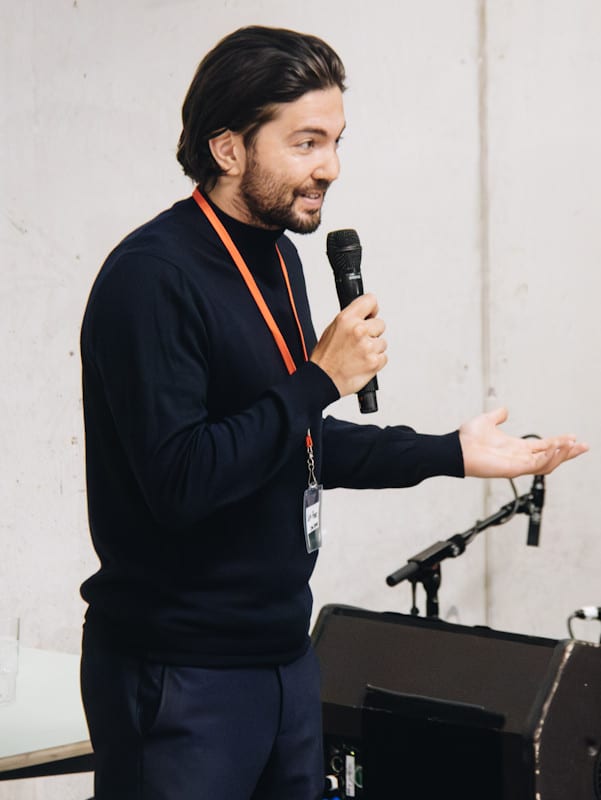
Liam Pieters is an astronomer, aerospace engineer, and a passionate storyteller about the universe. With an MSc in Physics and Astronomy and an MSc in Aerospace Engineering, he combines theoretical knowledge about the universe with technical expertise in space travel, a unique mix that few Dutch experts possess.
Liam works as an engineer on innovative solutions for one of the greatest challenges of our time: space debris. This places him at the heart of the international discussion on sustainability and technology in space travel.
Additionally, Liam is a familiar face in the media. In recent years, he has appeared on RTL4 and SBS6, on NPO Radio 1 and 2, and on various talk shows, where he made complex space travel and astronomy questions accessible.
By looking up more often, we learn not only more about the universe but also about ourselves.
In 2024, he founded the social media channel Sterrenpraatjes. With short and accessible videos about black holes, planets, and the life cycle of stars, he now reaches tens of thousands of followers and manages to inspire a broad audience.
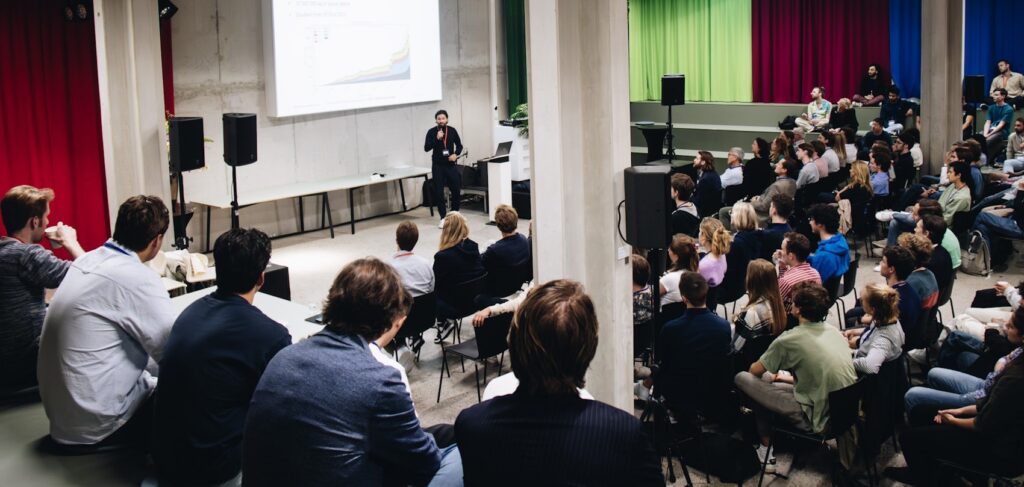
Whether it’s a keynote speaker, lecture, or workshop: Liam combines enthusiasm with sharp insights, humor, and vivid stories. He clarifies how significant the challenges in space are and how endlessly inspiring the universe remains for young and old alike.
1. Space Debris and Sustainability in Space
Space is not an infinite playground. Thousands of broken satellites and fragments float around the Earth, posing an increasing danger to new missions. How do we prevent a chain reaction of collisions? In this lecture, Liam Pieters explains what space debris is, what solutions are being developed worldwide, and why this topic is as important as climate and environment on Earth. An inspiring story about responsibility, innovation, and the future of space travel.
2. From the Big Bang to the End of the Universe
Where does our universe come from, and where is it headed? From the Big Bang to black holes and from the formation of galaxies to the possible death of the universe, Liam Pieters takes the audience on a journey through time. Clearly, vividly, and full of wonder, he outlines the grand scheme of the cosmos. A story about existential questions: where do we come from and what is our place in this immense whole?
3. The Future of Space Travel
Space travel is on the brink of a revolution. Satellite networks, moon bases, and the first steps to Mars are becoming a reality. What does this mean for science, economy, and our daily lives? Liam Pieters provides an overview of the key developments and explains where the major challenges lie: sustainability, collaboration, and safety. A lecture that shows how space travel will shape our future: not only high above us but also here on Earth.
4. The Science Behind Time Travel
Time travel sounds like science fiction, but physics shows that it is less far-fetched than you might think. From Einstein’s theory of relativity to black holes and wormholes: the laws of the universe give us a glimpse of how travelling through time could theoretically be possible. As a bonus, there is a quiz on which Hollywood films have accurately depicted time travel and which are too far-fetched. In this lecture, Liam Pieters unravels the science behind time travel: fascinating, understandable, and always with a touch of wonder.
5. Stargazing Without a Telescope
Discovering the universe doesn’t have to be complicated. Even without a telescope, you can admire planets, constellations, and shooting stars. In this practical lecture, Liam Pieters provides tips and insights to explore the sky yourself. Where should you look to find the North Star, how do you follow the moon to spot planets, and which nights are best for meteors? Moreover, you will learn how to recognise your own place on Earth by the stars you see, an ancient form of navigation that still captures the imagination today.