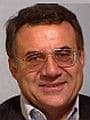
Engineer INSA Lyon - Industrial Chemistry Option - (1966). Doctoral Thesis: "Catalytic Reforming of Fuels" (1968) and State Doctorate in Bioengineering (1975). Gérard Goma is an expert in chemistry, petrochemistry, industrial microbiology, and enzymology, as well as in ecotechnologies. His ...
Engineer INSA Lyon – Industrial Chemistry Option – (1966). Doctoral Thesis: “Catalytic Reforming of Fuels” (1968) and State Doctorate in Bioengineering (1975). Gérard Goma is an expert in chemistry, petrochemistry, industrial microbiology, and enzymology, as well as in ecotechnologies. His expertise ranges from knowledge generation to pilot and then industrial stages.
Gérard Goma has indeed held both public, research, teaching, and knowledge valorization positions, as well as industrial roles. A researcher and teacher at INSA Toulouse since 1966, and a University Professor since 1978, Gérard teaches at INSA Toulouse (Laboratory LISPE UMR INSA INRA CNRS). Co-developer of the Biofood Engineering department at INSAT from 1968 to 1992, he also took on the development and responsibility for research, technology transfer, initial and continuing education from 1992 to 1995.
Between 1995 and 2004, Gérard Goma dedicated himself to the management of the “Laboratory of Biotechnologies and Bio Processes” (UMR INSA /CNRS /INRA) as well as the CRITT Bio Industries and its “scientific park”. This ensemble currently brings together 200 people. He was also responsible for biotechnology diversification at St Gobain for ten years, a member of the Technological Council of Rhône Poulenc for five years, and has undertaken numerous other academic missions, international expertise, and industrial consultancy, with over 180 scientific publications.
Gérard Goma was the Regional Delegate for Research and Technology of Midi Pyrénées from 2004 to 2007. He is also a UNMOVIC (UN) graduate in biological weapons inspection for mass destruction (2003, 2005) and a member of UN experts in chemical and biological disarmament.
Gérard Goma is currently conducting synthesis and reflection work on innovation and the creation of activities through public research and its stimulation. Scientifically and technologically, his work remains at the forefront of holistic and integrative microbiology (upstream) and on the issue of synergies between different application sectors of biotechnology. Greenhouse gases, carbon tax, food and non-food competition, and biofuels constitute the socio-economic components of his work.