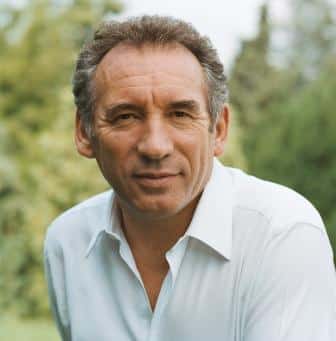
François Bayrou's roots are Pyrenean, terrestrial, and cultural. Born in Bordères, in the Pyrénées-Atlantiques, François Bayrou comes from a family of small-scale farmers. He grew up in a modest daily life, enriched by books. From his parents, who provided him with a strict yet open education, ...
François Bayrou’s roots are Pyrenean, terrestrial, and cultural. Born in Bordères, in the Pyrénées-Atlantiques, François Bayrou comes from a family of small-scale farmers. He grew up in a modest daily life, enriched by books. From his parents, who provided him with a strict yet open education, he inherited civic spirit, a sense of solidarity, and a genuine curiosity for politics.
Having graduated from the high school in Nay, he continued his studies at the University of Bordeaux. During this time, he attended the Community of the Ark, founded by the poet and philosopher Lanza del Vasto. Convinced by the non-violent, ecological, and protest-oriented thought of this disciple of Gandhi, he expressed the desire to become a “spokesperson for the voiceless” and began a passionate journey as a volunteer in associations.
At 23, he became an agrégé in classical letters. After the death of his father in a work accident, he juggled his young teaching career with the continuation of the family farm, which he still participates in today. He never considered abandoning the village that saw his birth. For he knows that the deeper the roots, the stronger the tree, and the more beautiful the fruits.
François Bayrou’s political journey begins in the Pyrénées-Atlantiques where he has his roots. Initially elected as a general councilor, he later became a deputy. In 1993, he was appointed Minister of National Education, a position he held for over four years.
His European convictions led him to lead the centrist list in the 1999 elections. Following this election, he sat in Strasbourg where he defended his vision of a Europe of peoples and a community-building process.
Elected president of the UDF in 1998, he clearly positioned himself for an autonomous political line, distinct from that of the RPR. Consistent with his discourse, he firmly rejected the idea of a single party merged into the UMP in 2002. That same year, his candidacy for the presidency received 2 million votes.
With a demand for integrity in French political life and a genuine separation of powers, the fight against debt is one of his key focuses during the 2007 presidential campaign. He garnered nearly 19% of the votes in this election and narrowly missed being present in the second round.
He was elected president of the Democratic Movement, a party created following the 2007 presidential election, the final step in achieving independence. He was the first political leader to denounce the collusion between private interests and public affairs regarding the Tapie affair. In his latest book, “2012, State of Emergency,” he identifies the causes of the country’s difficulties: the debt that imposes heavy burdens on future generations, the abandonment of industrial production, and the disintegration of education. These are the key areas that must be worked on together to restore France.
}