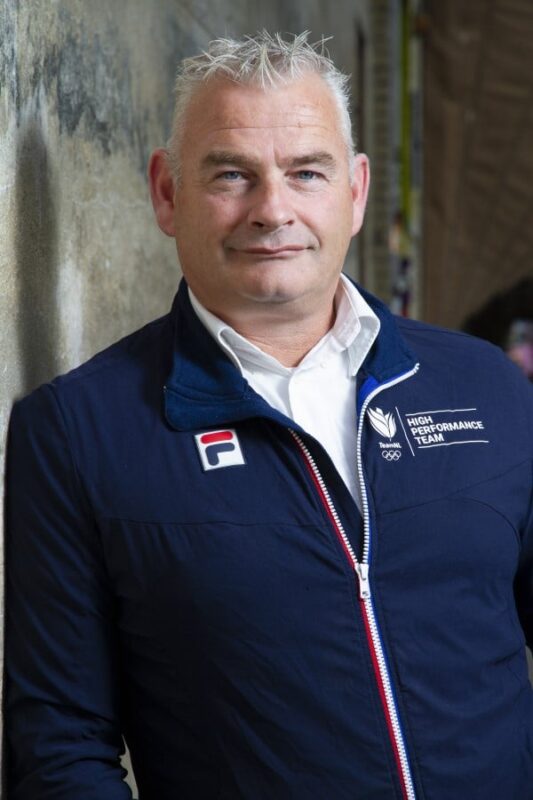
Emile Ntamack, nicknamed Milou, was born in Lyon. His father, a former football referee, introduced him to sports at an early age along with his two brothers, Georges and Francis. After trying football and athletics, it was on a particularly muddy rugby field that he first handled an oval ball. The ...
Emile Ntamack, nicknamed Milou, was born in Lyon. His father, a former football referee, introduced him to sports at an early age along with his two brothers, Georges and Francis. After trying football and athletics, it was on a particularly muddy rugby field that he first handled an oval ball. The spirit of rugby immediately captivated him, not only for the enjoyment he found in the sport but also for the camaraderie among players and supporters united by the same passion.
At 10 years old, he practiced football, rugby, and athletics, making numerous sacrifices and with the unwavering support of his parents. Rugby stood out. Quickly noticed, he attended regional training camps until being spotted by Christian Gajan, a Toulouse coach, leading to his entry into sports studies. Welcomed by the Perron family from Lavaur, a club in the suburbs of Toulouse, he played for this Tarn club. Heavily influenced by Roger Guiter, his coach and former Stade Toulousain player, he earned his first selection for the French cadet team. His journey with rugby had begun…
He joined the Stade Toulousain club where he spent his entire career (captain from 1996), building an exceptional record: Reichel French champion in 1989 and 1990, French champion in 1994, 1995, 1996, 1997, 1999, 2001 (finalist in 2003), winner of the Challenge du Manoir (now Coupe de France) in 1993, 1995, and 1998, and winner of the European Cup in 1996, 2003, and 2005 (finalist in 2004).
He debuted for the French team during the 1994 Tournament, participating a few months later in the memorable tour in New Zealand. On this occasion, he earned the admiration of one of his opponents: the young Jonah Lomu. Selected for the 1995 World Cup, Émile Ntamack distinguished himself by scoring a try against Scotland in stoppage time, securing France’s top spot in their pool and avoiding a quarter-final clash with New Zealand. In the next round against Ireland, he scored another try from an intercepted pass. These performances earned him a place in the World Cup’s team of the tournament. Emile N’Tamack then won the Latin Cup in 1995, the Grand Slam in 1997, and was the top scorer of the 1996 Tournament.
After ending his playing career, Emile N’Tamack became a coach at Stade Toulousain for the under-21s and with the French under-21 team, with which he became world champion in 2006, and was the backs coach for the French national team under the Lièvremont era.