François de Closets has been pursuing a dual career as a journalist and writer for about thirty years.In 1965, he joined the Television News and became the specialist in space and scientific issues. In 1978, he created the economic magazine L'Enjeu on TF1, with Emmanuel de la Taille and Alain ...
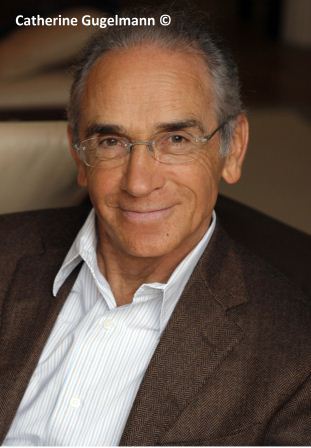
François de Closets has been pursuing a dual career as a journalist and writer for about thirty years.
In 1965, he joined the Television News and became the specialist in space and scientific issues. In 1978, he created the economic magazine L’Enjeu on TF1, with Emmanuel de la Taille and Alain Weiller; in 1987, he launched, with Richard Michel and Jean-Marie Perthuis, Médiations, a social magazine.
In 1992, he joined public service to design programs dedicated to science and health. These include Savoir Plus Santé, with Martine Allain-Regnault, and Les grandes énigmes de la science, with Roland Portiche, a program for which he was the producer and presenter for fifteen years.
Since 2006, he has been a columnist at La Chaîne parlementaire and has resumed his activities as an editorialist.
It was in 1968, after being excluded from ORTF, that François de Closets began his writing career. He achieved his first success with Le Bonheur en plus (1974). Following the memorable success of Toujours Plus ! (1982), François de Closets tackled a variety of subjects, and his essays, always provocative, garnered significant public acclaim. Tous ensemble (1985) challenges the trade union world. La Grande Manip (1990) criticizes the hypocrisy of political discourse. Tant et plus (1992) denounces the waste of public money. Le Bonheur d’apprendre (1996) advocates for a pedagogical renewal. Le Compte à rebours (1998) predicts the upcoming crises in France. L’Imposture informatique (2000), in collaboration with Bruno Lussato, addresses the excesses of micro-computing. La Dernière Liberté (2001) calls for the recognition of everyone’s right to choose their end of life. Ne dites pas à Dieu ce qu’il doit faire (2004) revisits the biography of Albert Einstein. Plus encore ! (Fayard/Plon) confronts the framework of Toujours plus ! with France in the 2000s. Le Divorce français was published by Fayard in 2008, followed by Zéro faute in 2009, L’échéance in 2011, and Le monde était à nous in 2012.