
Some people are tested by the storm. Others learn how to fly through it.

George Tielen has spent much of his life doing exactly that.
His career has taken him from giving jungle survival training in Suriname as a sergeant in the Royal Netherlands Army to flying search-and-rescue missions over the North Sea as a helicopter pilot with the Royal Netherlands Navy.
The North Sea is notorious for its treacherous weather. Staying calm when conditions turn against you is not a luxury. It is a necessity.
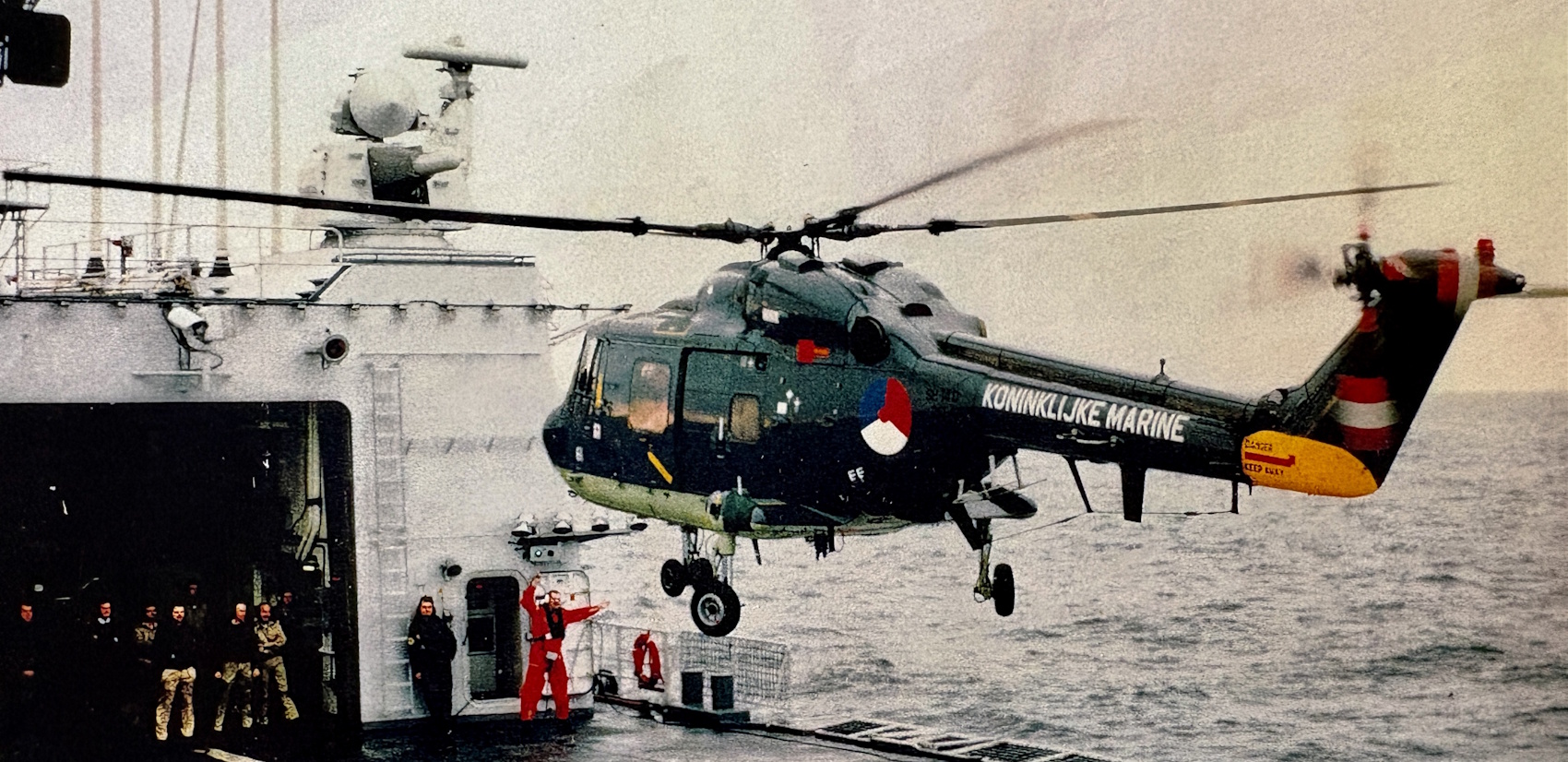
George mastered that skill. As Head of Helicopter Training, he was selected to represent the Netherlands at an international military helicopter competition in England. He returned as World Champion in Precision Flying.
He could have followed the well-trodden path of many of his colleagues and joined a commercial airline. Instead, he chose a different adventure: building a helicopter company in the Caribbean, the region where he was born and raised.
It was a decision that would test him in ways no training exercise ever could.
When the storm becomes personal
Shortly after launching his company, Pelican Air, George’s helicopter suffered an engine failure and ditched in the sea between Curaçao and Santo Domingo.
Trapped underwater for more than two minutes, he came perilously close to drowning.
He survived.
Looking back, George attributed his survival in part to a skill developed during his years in the Navy: the ability to remain calm under extreme pressure.
For many entrepreneurs, such an experience might have marked the end of the dream.
For George, it was the beginning of another chapter.
A year later, Pelican Air rose again.
Turning adversity into innovation
George saw an opportunity to use helicopters for something bigger than flying. He demonstrated how they could help the police fight crime and intercept drug smuggling from Venezuela and Colombia.
The authorities took notice. With the support of the Justice Department, George helped establish an airborne law enforcement operation, training police officers to work from helicopters using police radio, powerful searchlights and infrared cameras.
The results were significant enough to have effect on the crime statistics and attract the attention of the very people the operation was designed to stop.
The criminal underworld responded with threats. When those failed to make him back down, the threats escalated into three attempts on his life.
George’s response?
Rather than seeing the danger as a reason to quit, he saw it as evidence that the operation was making a difference.
Eventually, the threats stopped. Perhaps his adversaries finally understood that intimidation was unlikely to change his course.
And there are many stories from those years that deserve a chapter of their own — including the one in which his Belgian Shepherd reportedly saved his life.
Innovation with a purpose
George’s work earned international recognition, including a Distinguished Achievement Award from the International Helicopter Association in the United States and an Innovation Award for his approach to public safety.
One initiative brought together the police, a major private security company and helicopter crews in a coordinated response system. Customers could activate a discreet alarm at home. The signal would reach the security control centre, triggering a rapid response involving the police and a helicopter.
George engineered the operation around one critical resource: time. When an aarm came in the hangar doors opened automatically. The helicopter rolled out on its rail-mounted platform. The pilot and police officer could board and take off with minimal delay.
The goal was to reach any address in Willemstad within five minutes.
This was more than an aviation project. It was a practical application of technology, teamwork and operational thinking to help protect people when they were most vulnerable.
Starting over — again and again
Then, ten years after the launch of Pelican Air, disaster struck again.
During a nighttime police operation, a kite string still suspended over the city became entangled in the helicopter’s rotor. The aircraft was destroyed. Fortunately, nobody was injured.
Once again, George faced the prospect of starting over.
Once again, he refused to let the setback define him.
While planning a new venture with new shareholders, he wrote two novels, Pelican Revival and Trojan Triangle, both published in the United States.
He went on to establish BlueSkies Helicopters. After five years, a serious medical crisis in his family led him to part ways with his shareholders and return to the Netherlands, where better treatment was available.
For some people, that might have been the end of an extraordinary entrepreneurial journey.
For George, it was another change of direction.
From helicopters to flying cars — and beyond
As drones began transforming aerial photography, George recognised another opportunity. Drawing on his expertise in aerial filming, he founded a film company, built a successful client base and partnered with a television station.
Five years later, he was asked by PAL-V, the Dutch flying-car company, as Head of Flight Training. There, he helped shape flight training and worked with engineers on cockpit design.
Because the certification of the PAL-V Liberty was slow and he wanted to research his innovative concept of teaching aspiring pilots to develop their flying skills through simulation, he parted ways with PAL-V. So he funded SimCoach, an innovative flight simulator company built around a simple but ambitious idea: Today, SimCoach combines flight training with team-building experiences and simulator leasing for flight schools.
From military aviation to law enforcement, from entrepreneurship to filmmaking, and from flying cars to flight simulation, George has continually found new ways to turn experience into opportunity.
His career is a reminder that resilience is not simply about surviving a crisis. It is about what you choose to do next.
The storm may force you to change course. It may even destroy the aircraft you built your dream around. But it doesn’t have to destroy the dream itself.
Sometimes, the next chapter begins precisely where the old one ends.
From surviving the storm to sharing the lessons
Looking back, one thing connects all the chapters of George’s life: the ability to stay calm when everything around him is falling apart, and to find new opportunities where others see obstacles.
These are lessons learned, not from textbooks, but from a life lived at the intersection of aviation entrepreneurship, risk and resilience.
Today, George is making these experiences available to organisations and leaders who face their own turbulent times.
George is now available as a keynote speaker, sharing insights on leadership in times of change, uncertainty and adversity.
His keynotes combine real-life stories with the timeless principles of Stoicism, practical leadership and a healthy dose of humor. Because staying calm under pressure doesn’t mean taking yourself too seriously. Sometimes, the ability to laugh at yourself is just as important as the ability to make the right decision.
His message is simple: you cannot always control the storm, but you can control how you respond to it.
And sometimes, the best way forward is to take a deep breath, keep your sense of humor, and find a way to fly again.
Interested in bringing George’s story and insight to your next conference, leadership event or corporate gathering? Get in touch to discuss a keynote.
A contribution of
-
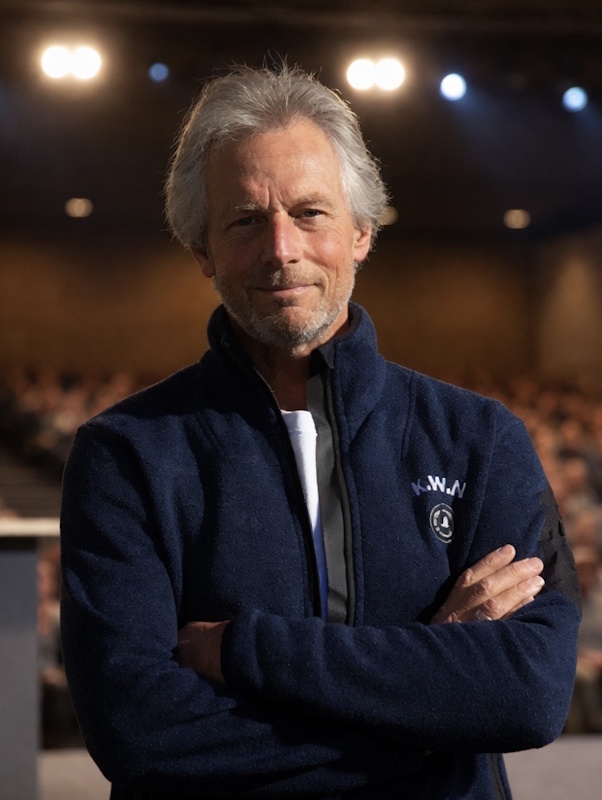
Rescues in the North Sea under all weather conditions, anti-narcotics police flights against armed Colombian traffickers in the Caribbean, and assassination attempts resulting from the success of the aviation operation, George Tielen experienced and endured it all over the course of several decades. Stress, decision-making and control were not theoretical concepts, but part of his daily reality.
From reading to listening?
The best stories truly come to life on stage. Our consultants will be happy to advise you personally.