
An organisation is not a machine. It is a house full of human life.

We measure absenteeism. Investigate workload. Train leadership. Work on culture and psychological safety. All meaningful. But what if we mainly look at what becomes visible, while the cause lies elsewhere? Stress, conflict, turnover, withdrawal behaviour and dropout rarely occur just like that. They are signals that the alignment between people, work and organisation is under pressure. Because an organisation is not a machine. It is a house full of human life. And life has conditions.
People need safety, rhythm and recovery. They want to experience perspective, use their talents and competencies, feel autonomy, be connected and be meaningful. Not soft extras, but conditions under which people can function healthily and contribute. This applies not only at home. After all, a person does not stop being human once they step into an organisation.
From this thought, I developed the Theory of Continuous Alignment. Underneath are thirteen principles about how life develops, adapts and tries to stay healthy. Together they form a kind of constitution for healthy organising: not devised from management models, but from the logic of life itself. This applies to everyone within the walls of an organisation. When we do not respect these, absenteeism, insecurity and turnover arise.
One of these principles is simple: life constantly tries to align with changing circumstances. An organisation should therefore do the same.
Not measuring once a year, but continuously investigating: does the balance still match between what the organisation asks and wants to achieve and what people need? And does what people can and want to contribute still align with the direction of the organisation?
Therefore, in cases of absenteeism, conflict or psychological insecurity, the first question might not be: ‘How do we solve this?’, but: ‘What is this signal trying to tell us?’
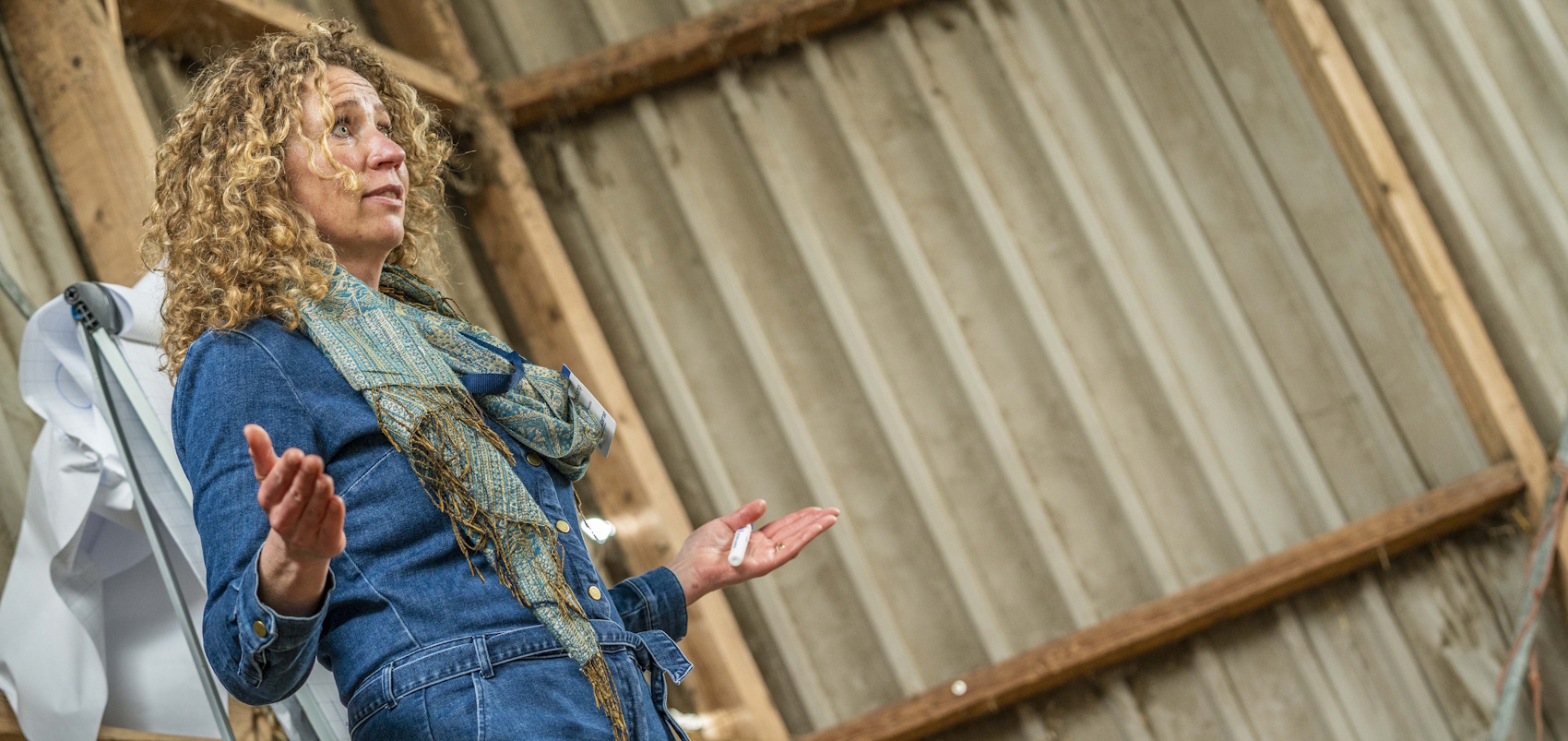
With the Flow Compass®, organisation ecologist Leonie Braskamp makes that alignment visible. In her lectures, she takes leaders, directors and professionals beyond behaviour, figures and symptoms, to the principles that determine whether people and organisations can continue to grow. Not steering harder. Looking differently. Organising from the logic of life. Actually quite simple. But just a bit different.
A contribution of

From reading to listening?
The best stories truly come to life on stage. Our consultants will be happy to advise you personally.