
À propos
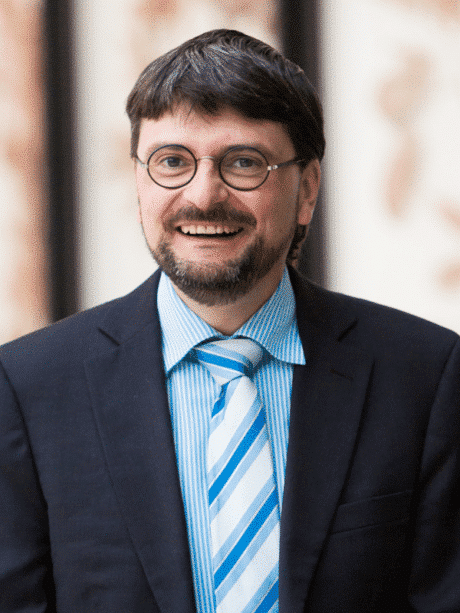
Erik Händeler
Erik Händeler, journaliste économique, futurologue et auteur à succès, a commencé sa carrière dans un quotidien. Il a étudié la politique économique et l’économie à la LMU de Munich. Depuis 1993, il travaille scientifiquement sur la théorie des longues vagues économiques (cycles Kondratieff).
Il est devenu auteur à succès avec les livres « L’Histoire du Futur » en 11ème édition et « Le Monde de la Pensée de Kondratieff – Les Opportunités dans la Transformation vers une Société de Connaissance » en 8ème édition. Son nouveau « Livre d’Histoire pour Optimistes – Pourquoi la plupart des choses étaient pires dans le passé et seront meilleures dans le futur » est en préparation. (Livres traduits de l’allemand)
En 2010, l’Académie des Sciences de Russie l’a honoré pour ses réalisations économiques et scientifiques. Avec son savoir-faire d’expert et ses thèses polarisantes, il ne laisse aucun de ses auditeurs indifférents et est l’un des conférenciers les plus recherchés dans le domaine de la productivité d’une société basée sur l’information. Erik Händeler est l’ambassadeur d’une culture de travail coopérative et d’une politique de santé préventive.
Toutes les conférences sont également disponibles dans la version extravagante en tant que technologie de scène hologramme 3D
Vivez l’histoire et le futur de près : Être au cœur de l’action lorsque le train siffle bruyamment sur la scène, lorsque le satellite Sputnik vole dans l’espace, mais aussi être présent lorsque le travail d’équipe nécessite de nouveaux rôles ou lorsque des extraterrestres atterrissent sur scène. Les crises antérieures et les bouleversements techniques rendent le présent compréhensible et dissipent la peur de l’avenir : La prospérité de la société basée sur la connaissance dépend avant tout du comportement social coopératif et de la santé psycho-sociale des personnes qui façonnent et décident derrière la technologie numérique.
1. What comes after the crisis?
The economy is facing a recession. But we can learn from the past: Deep crises have always occurred when an invention was largely and thoroughly exhausted, as was the case in 1873 after the construction of the railroad, in 1929 after electrification, or in the 1970s with the automobile. What will come after information technology? The work that will be created is primarily work on people and knowledge-based work between people. What makes people tick is becoming the focus of economic development. Based on the Kondratieff theory (the theory of long economic waves), Erik Händeler analyzes the current economic situation: The path to new economic and political stability leads through higher productivity of knowledge-based work, which depends above all on social behavior in teams and on value concepts.
2. The story of the future
The economy develops in long waves, each supported by its own technologies such as railroads, electric power or, most recently, the computer. Severe economic crises follow when they have become widespread. Things pick up again when the next level of prosperity is reached. In the past 200 years of industrial history, the focus has always been on materialistic improvements. But now, in the knowledge-based society, for the first time productivity depends on the people behind the technology, says Erik Händeler: on the ability of knowledge workers to work together, on their mental health, and on their attitude of starting from the common good rather than from self-interest.
3. Why prosperity depends on the people behind the technology
Even before Corona, the economy was unstable. Machines have long since taken over material work, and computers/AI have taken over structured knowledge work such as robot control, data analysis or driving. What remains and grows is work on people and with knowledge – between people. The more work depends on immaterial thought work, the more we depend on the partial knowledge of others. Suddenly, everyone becomes important to the overall success. This forces cooperation at the same level, transparency, willingness to reconcile, authenticity instead of status orientation, the ability to cooperate, long-term orientation. Is the world perhaps getting better after all?
4. Why health is becoming a growth engine for the economy
In the media, the health care system appears only as a problem, with its distribution struggles, rising costs and escalating deficits. The discussion could be quite different – about a health care system as the key to solving most of the other problems facing society, such as national debt, unemployment, or lurching social security. After all, when companies complain about the excessively high non-wage labor costs, the underlying cause is rising health issues. In the health of the Germans, the largest, hitherto dormant resources of the national economy can be mobilized – an impetus for a long-lasting economic boom. To understand how a system of keeping the healthy healthy drives the economy, it is necessary to look at economic booms of the past: Even steam engines or computers saved resources and increased labor potential – the same role will be played in the future by innovations and new structures in health care.