
Über
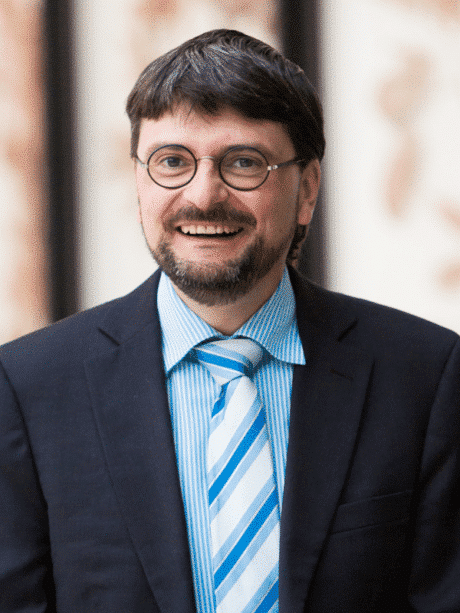
Erik Händeler
Erik Händeler, Wirtschaftsjournalist, Zukunftsforscher und Bestsellerautor, begann seine Karriere bei einer Tageszeitung. Er studierte Wirtschaftspolitik und Volkswirtschaftslehre an der LMU München. Seit 1993 arbeitet er wissenschaftlich an der Theorie der langen Wirtschaftszyklen (Kondratieff-Zyklen).
Mit den Büchern „Die Geschichte der Zukunft“ in der 11. Auflage und „Kondratieffs Weltbild – Die Chancen im Wandel zur Wissensgesellschaft“ in der 8. Auflage wurde er Bestsellerautor. Sein neues „Geschichtsbuch für Optimisten – Warum früher vieles schlechter war und in Zukunft besser wird“ ist in Arbeit. (Bücher aus dem Deutschen übersetzt)
2010 ehrte ihn die Russische Akademie der Wissenschaften für seine wirtschaftlichen und wissenschaftlichen Leistungen. Mit seinem Expertenwissen und polarisierenden Thesen lässt er keinen seiner Zuhörer unberührt und gehört zu den gefragtesten Rednern im Bereich der Produktivität einer informationsbasierten Gesellschaft. Erik Händeler ist Botschafter für eine kooperative Arbeitskultur und eine präventive Gesundheitspolitik.
Alle Vorträge sind auch in der extravaganten Version als 3D-Hologramm-Bühnentechnologie verfügbar
Erleben Sie Geschichte und Zukunft hautnah: Mitten drin sein, wenn der Zug lautstark über die Bühne dampft, wenn der Satellit Sputnik durch den Weltraum fliegt, aber auch dabei sein, wenn Teamarbeit neue Rollen erfordert oder wenn Außerirdische auf der Bühne landen. Die früheren Krisen und technischen Umbrüche machen die Gegenwart verständlich und nehmen die Angst vor der Zukunft: Der Wohlstand der wissensbasierten Gesellschaft hängt vor allem vom kooperativen sozialen Verhalten und der psychosozialen Gesundheit der Menschen ab, die hinter der digitalen Technologie gestalten und entscheiden.
1. What comes after the crisis?
The economy is facing a recession. But we can learn from the past: Deep crises have always occurred when an invention was largely and thoroughly exhausted, as was the case in 1873 after the construction of the railroad, in 1929 after electrification, or in the 1970s with the automobile. What will come after information technology? The work that will be created is primarily work on people and knowledge-based work between people. What makes people tick is becoming the focus of economic development. Based on the Kondratieff theory (the theory of long economic waves), Erik Händeler analyzes the current economic situation: The path to new economic and political stability leads through higher productivity of knowledge-based work, which depends above all on social behavior in teams and on value concepts.
2. The story of the future
The economy develops in long waves, each supported by its own technologies such as railroads, electric power or, most recently, the computer. Severe economic crises follow when they have become widespread. Things pick up again when the next level of prosperity is reached. In the past 200 years of industrial history, the focus has always been on materialistic improvements. But now, in the knowledge-based society, for the first time productivity depends on the people behind the technology, says Erik Händeler: on the ability of knowledge workers to work together, on their mental health, and on their attitude of starting from the common good rather than from self-interest.
3. Why prosperity depends on the people behind the technology
Even before Corona, the economy was unstable. Machines have long since taken over material work, and computers/AI have taken over structured knowledge work such as robot control, data analysis or driving. What remains and grows is work on people and with knowledge – between people. The more work depends on immaterial thought work, the more we depend on the partial knowledge of others. Suddenly, everyone becomes important to the overall success. This forces cooperation at the same level, transparency, willingness to reconcile, authenticity instead of status orientation, the ability to cooperate, long-term orientation. Is the world perhaps getting better after all?
4. Why health is becoming a growth engine for the economy
In the media, the health care system appears only as a problem, with its distribution struggles, rising costs and escalating deficits. The discussion could be quite different – about a health care system as the key to solving most of the other problems facing society, such as national debt, unemployment, or lurching social security. After all, when companies complain about the excessively high non-wage labor costs, the underlying cause is rising health issues. In the health of the Germans, the largest, hitherto dormant resources of the national economy can be mobilized – an impetus for a long-lasting economic boom. To understand how a system of keeping the healthy healthy drives the economy, it is necessary to look at economic booms of the past: Even steam engines or computers saved resources and increased labor potential – the same role will be played in the future by innovations and new structures in health care.